

Issue 296
The Year of the Phage Machine


Happy 2025 everyone! It's still January so we can still say happy new year! We are finally back after a nice long extended Christmas break + insanity January. Tons of phage news has accumulated — here you go!

Sponsor
Sponsor
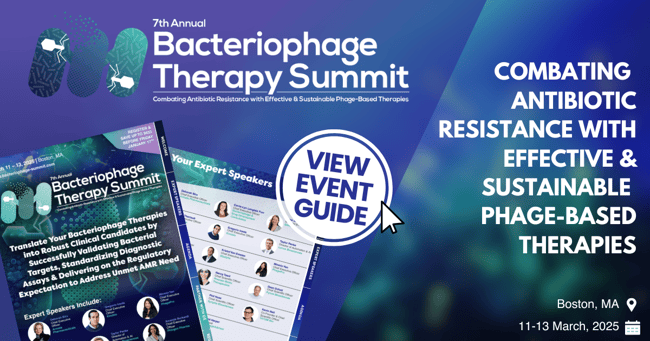
At the 7th Bacteriophage Therapy Summit, returning to Boston March 11-13, 2025 (next week!), dive into the regulatory and investment landscape for drug developers, clinical updates showing efficacy, utilizing machine learning, and developing personalized and off-the-shelf therapies to fight AMR in infectious diseases.
Register here and use discount code PHAGEDIRECTORY10 for 10% off!
Community digest5updates5jobs5posts
Updates
How long until governments can subscribe to antimicrobials (instead of paying per use), so it will finally be economically viable to develop them? Italy is now the second country (after the UK) to create a path for this! Damiano de Felice and John Rex break down Italy’s new ‘antibiotic pull incentive’, which will devote €100 million annually for innovative antimicrobials.
NIAID has two grants open that fit could fit your phage research!
-
the 2026 Omnibus Broad Agency Announcement supports work on infectious diseases, including AMR and countermeasures;
-
the CARBIRUs (Combating Antibiotic-Resistant Bacteria Interdisciplinary Research Units) program funds interdisciplinary teams tackling AMR.
Are you my host? Paul Hyman (Ashland University) published a new paper on methods for linking phages with hosts, showing growth-based, genome sequence-based, and proximity-based approaches each measure different aspects of phage-host interactions and have distinct advantages and limitations.
Owen Tuck (University of California, Berkeley) and colleagues published a new paper on Hachiman antiphage defense complex, showing Hachiman is a nuclease-helicase complex that senses genome integrity and degrades DNA upon detecting damage, inhibiting phage replication.
Susu Jiang, Chau Chen (Shenzhen University Medical School) and colleagues published a new paper on how a phage-encoded kinase phosphorylates multiple host defense systems including DndFGH and CRISPR-Cas to enable infection.
Jobs
Fabienne Santmann (Balgrist University Hospital / University of Zurich) seeks a postdoc (80-100%) from March/April 2025 for 2 years to develop protocols for clinical sample analysis in a randomized trial, validate phage susceptibility methods, and oversee lab work.
Creative Biolabs is seeking a Senior Project Manager, Phage Therapy to join their R&D team to focus on phage discovery and cocktail optimization.
Unity Health Toronto, Canada, is hiring a clinical fellow to study phage therapy for multidrug-resistant infections, focusing on urinary tract and orthopedic-related infections. The one-year fellowship starts in Oct/Nov 2025, with applications due by February 12, 2025.
The University of Glasgow is hiring a Research Associate, to study mechanisms and evolutionary dynamics of phage-anti-phage systems, specifically newly discovered anti-phage systems in Pseudomonas aeruginosa, under Dr. Giusy Mariano's supervision.
The University of Leicester is hiring PhD students, to study biosciences topics like phage biology, antimicrobial resistance, and protein structures as part of the BBSRC Midlands Integrative Biosciences Training Partnership.
Community board
Carolyn Teschke (University of Connecticut), Chuan (River) Xiao (University of Texas at El Paso), and Reza Khayat (City College of New York) are hosting the XXIX Biennial Conference on Phage/Virus Assembly.
The event will take place June 15-20, 2025 at Cape Cod Irish Village in Hyannis, MA, and aims to promote research on virus assembly through open dialogue between researchers from around the world.
The Canadian Society of Microbiologists (CSM) is hosting its 74th Annual Conference.
CSM will take place June 17-20, 2025 at Université de Montréal, the largest francophone university of Canada. The theme for this year’s meeting is “Microbiology for society”; to emphasize how Microbiology has and continue to shape the humanity since millenaries in the different field of life.
The 1st International Symposium on Advances in Phage Therapeutics will take place on June 16-17, 2025, in Braga, Portugal.
Organized by experts behind the Viruses of Microbes 2022 Conference, this symposium will focus on the latest developments in phage therapy, covering topics such as personalized treatments, pharmacokinetics, and applications for chronic infections. Researchers, healthcare professionals, and industry experts are invited to join discussions on the future of phage-based therapeutics.
Stephen Theriault, CEO of Cytophage, gave a TED Talk on Harnessing Phages to Combat Superbugs, exploring how phages can address antibiotic resistance. A scientist, entrepreneur, and former member of Canada’s Ebola vaccine team, he shares his team’s work developing engineered phages to fight bacterial infections, improve food security, and protect the environment.
Sabrina Green via X: If anyone has Endotrap kits and wants to share let us know. This is for patient cases.
Hi everyone,
Time flies, doesn’t it? I still remember writing the outlook letter in 2024. We were still in Australia, still thinking about our big move to SF. Researching how to move our adopted kitty Mivi across the pond. A year later we feel like we’ve lived in this city for decades. Oh how time flies!
For 2025, Phage Directory (and Capsid & Tail) will largely be the same. Capsid will still be covering phage news, jobs, and events (please send your jobs and conferences to us!).
For this year, I’m eager to cover more papers in the intersection of machine learning, biology, and phage, as both Jessica and I believe that phage therapy research will continue to drift towards becoming more data-driven and computational. While I will cover more ML/bio papers, Jessica is planning on releasing many more Podovirus podcast episodes.
(If you’d like to be a guest on the podcast, email us!)
As for guest posts, we’ll have an upcoming post by:
- Silvia Würstle, on how she got her new lab set up as a PI, her tips and tricks, and what she learned;
- A podcast interview with Ross Rheingans-Yoo, a biotech investor who thinks phages are actually very interesting, and who’s on a mission to make clinical trials cheaper;
- A recap of my interview with Sandro Sulakvelidze from Intralytix, on how he spent the last 26 years building a long-lasting phage company, and how Intralytix is about to get results on its phage therapy challenge trials (heathy human patients infected on purpose with Shigella, then treated with phages, here in the US!)
One of the biggest goals this year is to add more resources — like tools, guides, databases, etc. — to help phage labs get more computational. I’ve been playing around with adding more resources like bioinformatics and ML, but I’ll make an attempt to double down on it this year. We have some ideas, but we’d love to hear from you.
As part of this shift, we’re taking Phage Directory back to its roots — as a scientific resource and community for phage therapy researchers. I’m also hoping to add some tools to make it easier to search for phages, bacteria, and phage papers. Stay tuned!
The biggest delight of 2025 is how the phage conference circuit is absolutely tingling with options, from the International Symposium on Phage Therapy in Portugal, hosted by Joana Azeredo and her team, to the Biennial Phage/Virus Assembly Meeting in Cape Cod, to the IAS-USA Conference on Bacteriophages in DC, run by Graham Hatfull, Chip Schooley, Paul Bollyky, and others.
And of course… drum roll… the return of the Evergreen Phage Meeting! This time in Knoxville, Tennessee.
Evergreen’s website isn’t ready for signups yet (I’m still squashing bugs and we’re finalizing some details, but I see all of you who figured out the link and are signing up anyway. You’re the true fans. I see you!)
Again, we’re super excited for 2025. There’s so many conferences, and so little time.
My prediction for 2025: by the end of 2025, at least 10 phage labs (that have never previously touched machine learning) will build and train a useful model based on their data.
Jessica’s prediction for 2025: We’ll see an array of phage therapy centers popping up, especially across Asia (China, Singapore, Nepal, etc) but also in Europe and potentially South America (Uruguay is already almost there!). Clinical trials on phage therapy will start springing up especially in China, and they’ll move fast. We’ll see multiple started and completed phase 2 phage clinical trials by end of 2025. At least one will show efficacy!
To phages and beyond!
~ Jan & Jessica <>-{
Jan Zheng, MHCI
I'm Jan, the other half of Phage Directory, and co-write Capsid & Tail.
Previously, I did data work at Phage Australia / Westmead Institute, where I built the biobank databases, data systems, and bioinformatics workflows for the clinical trial
I have a background in computer science and human-computer interaction, and I'm currently full-time at building the agentic layer for science at Nvidia.

Jessica Sacher, PhD
I'm a co-founder of Phage Directory and have a PhD in Microbiology from the University of Alberta (I studied Campylobacter phage biology). For Phage Directory, I help physicians find phages for their patients, and I'm always trying to find new ways to help the phage field grow (especially through connecting people and highlighting awesome stuff I see happening in the field).
I spent 2022-2024 as a postdoc in Jon Iredell's group at Westmead Institute for Medical Research in Sydney, Australia, helping get Phage Australia off the ground. I helped set up workflows for phage sourcing, biobanking, diagnostics, production, purification and QC of therapeutic phage batches, and helped build data collection systems to track everything we did. We treated more than a dozen patients in our first year, and I'm so proud of that!
As of 2024, I joined the Bollyky lab at Stanford University as a Staff Scientist, where I'm focused on phage engineering and delivery (to both microbial and human cells) and hydrogel-embedded phage cocktail development for wounds!