

Issue 67
Online communities and working from home

In the spirit of social distancing and working from home, this week we're exploring some ideas and tools that enable online communities and allow teams to collaborate from around the world and to work from home.
Community digest9updates4jobs4posts
Updates
Adaptive Phage Therapeutics just got FDA approval to test their expanding, polymicrobial phage library approach in the clinic. This is a big step, and shows that the FDA can be supportive of a personalized phage library approach to phage therapy. The company will enroll patients at three sites with complicated/chronic UTIs, starting soon.
Phages are abundant in the gut, but few have been isolated and studied. Andrew Hryckowian (Stanford University) and colleagues published a new preprint reporting the genomes of 27 Bacteroides thetaiotaomicron phages. By looking at host tropisms of these phages as well as their genomes, they identified alleles of phage structural genes associated with infectivity.
Megha Shah (University of Toronto) and colleagues published a sneak peek of an upcoming Cell paper from their lab: they've identified a phage-encoded "anti-activator" protein that disrupts Pseudomonas aeruginosa quorum sensing and pilus assembly.
Kurt Selle (Locus Biosciences) and colleagues, in collaboration with NC State University, have published a new paper in mBio showing that phage-delivered programmable CRISPR therapeutics (recombinant phage expressing host genome-targeting CRISPR RNAs) can effectively target C. difficile in vivo. mBio paper | NC State News article
Cooperation, altruism, and cheating... how much do we know about how these interactions apply to phages and their hosts? Patrick Secor and Ajai Dandekar (University of Montana) have published a new mBio minireview on phage-host sociobiology.
Wondering how many new species of viruses of microbes have been classified as of late? The International Committee on Taxonomy of Viruses (ICTV) just published their update on prokaryotic viral taxonomy for the last two years. Highlights include the creation of one new order, 10 new families, 22 new subfamilies, 424 new genera and 964 new species!
Ella Balasa, who received phage therapy in 2019 (which she wrote about in Capsid & Tail earlier this year), has her own column in Cystic Fibrosis News Today called This Lung Life. Her newest article describes her participation in an FDA panel, where she gave feedback on regulatory considerations that could increase access to individualized phage treatments.
Laura Sisk-Hackworth, an SDSU/UCSD student, wrote a blog post for the Roach Lab blog about a talk given by SDSU professor Rob Edwards as part of the IPATH seminar series about how crAssphage was discovered.
Looking for a new online teaching tool for virology classes? Check out this interactive Virus Explorer by HHMI, which lets you explore the diversity of viruses based on structure, genome type, host range, transmission mechanism, and vaccine availability.
Jobs
Apply for an MSc student position at the Polish Academy of Sciences (Warsaw, PL): projects relate to developing a toolkit for modulation of virion stability using phages as models.
Forschungszentrum Jülich in Germany has an open PhD position for a plant-bacteria-phage interaction project.
The Max Rubner-Institute in Kiel, Germany is hiring a scientist/microbiologist to work on genetics and systematics of virulent and temperate phages, as well as isolation of novel phages from environmental and human faecal samples.
An early stage biotechnology company in Gaithersburg, MD is hiring an experienced microbiologist/phage biologist to join a team developing phage therapies.
Community board
VoM COVID Policy Announcement
Dear colleagues,
We are working towards the VoM2020, which is planned to take place on the 13-17 July, in the consideration that the situation will be solved by that occasion. The Organizing Committee is naturally closely monitoring the situation concerning COVID-19 through both the daily situation reports from the World Health Organization and the Portuguese Health Authorities.
If, in the unlikely situation the COVID-19 outbreak will not be solved in July, we may consider postponing the meeting but never cancelling it.
The dead-line for abstract submission will be extended to 30th March. Please visit our website www.vom2020.org
We look forward to welcoming you in Portugal in July 2020,
Joana & Madalena On behalf of the organizing committee
Boston PFU Meeting Postponed
Hello everyone, Due to pesky eukaryotic viruses, next week’s PFU meeting will be postponed. On the bright side, last week we received some funding from New England Biolabs to continue catering the meetings, so you can look forward to the resumption of PFU meetings with food and beers later in the year. Stay sane, Siân
Seeking Phi6 and MS2 phages for research
I'm hoping to use Phi6 and MS2 as a surrogate model system for studying infectious disease transmission. I previously worked at Pitt on influenza viruses, so I'm new to the phage community. Because we're such a small college, I have an extremely limited budget and can't afford to purchase the commercial phage. Are there any researchers out there who might be willing to share Phi6 and/or MS2 with my lab? Please contact me at kkormuth@bethanywv.edu if you can help.
Special Issue about phage therapy in "Microorganisms" Journal
The journal Microorganisms has a special phage issue open called "Bacteriophage Treatment as an Alternative Technology to Inactivate Pathogenic Bacteria: A Generalized Worldwide Growing Acceptance". Guest editor: Prof. Dr. Adelaide Almeida, University of Aveiro, Portugal.
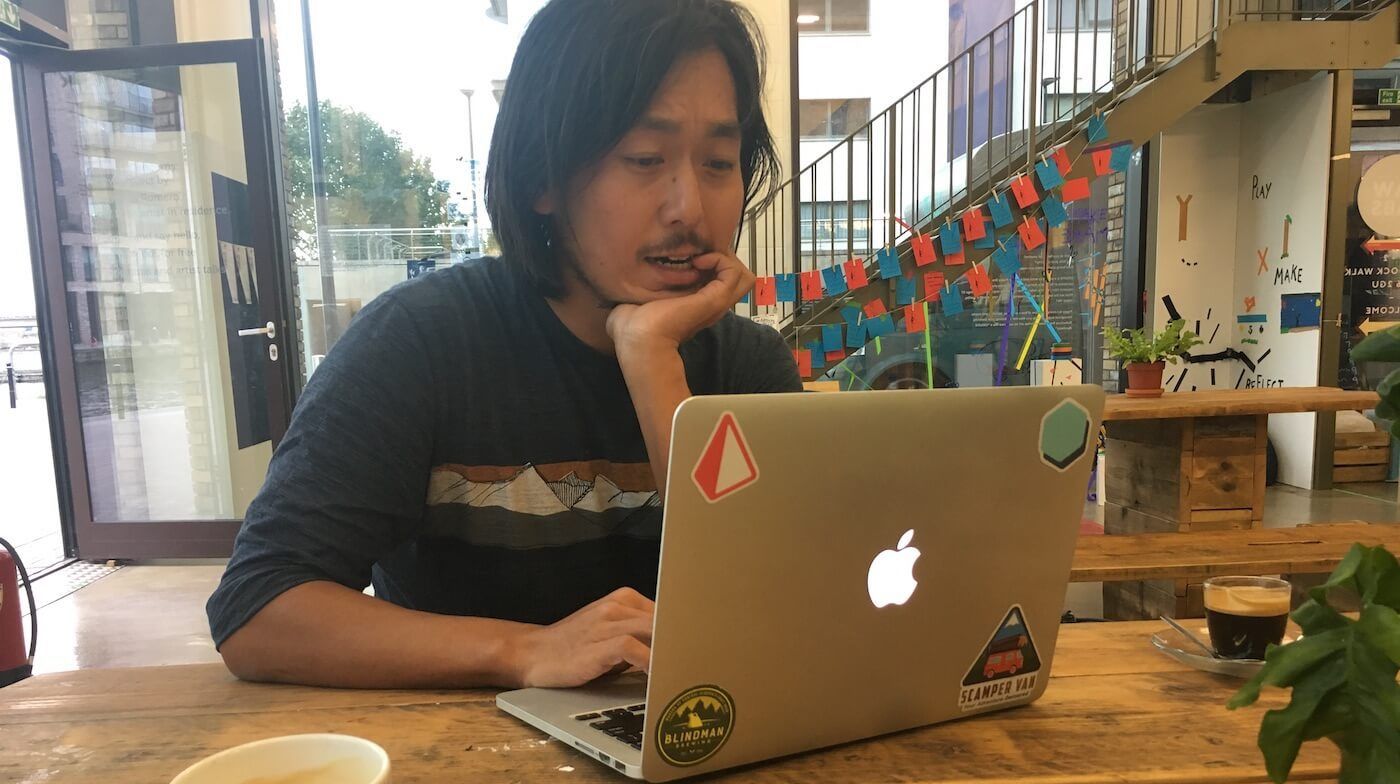
As more labs and offices are closing and people are told to stay and work from home, we thought we could share a few tips and tools that we use at Phage Directory that help us get work done both when we're working from our homes and when we're together on the road.
How we get work done (remotely or not)
1. Write everything down in a place you can easily access
All the notes we record — from conferences to field notes with researchers — are recorded in Notion, our "lab notebook." Notion is a productivity tool that we use to write down all our findings, ideas, business plans, processes. It's also where we write down our thoughts, track our tasks, and how we organize our Capsid & Tail articles and guest contributions. For example, here's our Notion draft of the article that you're reading right now.
If you'd like to try out Notion, please sign up using our referral link (this supports us as it helps us get credits!).
2. Process is key to getting work done
This is an area we're continuously improving. For a two-person team to publish a weekly newsletter like Capsid & Tail every week, we've created processes using Notion to share links, draft and proof each issue, and to get the issue published both online and sent to our readers every week through Mailchimp. After 66 issues of Capsid & Tail, we're still constantly tweaking our publishing process to be as fast as possible!
3. We default to face-to-face meetings
We prefer in-person meetings, as they feel more personal, but because the phage community is so spread out, most of our meetings are hosted online. We use video conferencing tools like Zoom, Skype, and Whereby (depending on what other people have access to), which all support multi-person video calls.
4. We use Slack for real-time work
We prefer using email for regular communications, but for casual, real-time conversation, we prefer using Slack. Slack allows us to for example work out project details quickly with a group of people without getting overwhelmed in long email threads. (The Phage Directory Slack community is now retired; read the notice.)
5. We use Airtable for organizing data
Airtable is a data organization tool that's part Excel, part database. It helps us keep track of the hundreds of researchers we've met, and helps us keep tabs on the landscape of phage companies, phage products, and clinical trials. Airtable also runs our site content, including our list of phage hosts, labs, researchers, and organizations, and each of our weekly Capsid & Tail articles.
Online community tools
What does the term "online community" mean when it comes to getting work done? In the programming world, we have been getting work done through "online communities" for decades. We have tools that allow developers to work with each other from across the world — we have tools that allow us to share and build upon each other's code, and comprehensive knowledge bases that collect other developers' questions and answers over time.
Here are some online community tools which I use on a daily basis to keep Phage Directory running:
Github
Github lets developers upload, share, and comment on code. Anyone can download code that's already been written to either study it or to use it as a part of their own projects.
This type of code sharing, called "open source", lets developers use code that others have written as building blocks to create their own projects. Open source allows a single developer like myself to rapidly build large projects like the Viruses of Microbes Abstract Portal, or the Phage Directory website. Phage Directory runs on many open source projects, and is itself open source! Here are the tools we use, and here is our Github.
Stack Overflow
Stack Overflow is a resource where developers ask and answer each other's technical questions. These questions are citeable and searchable, so over time, most programming questions can easily be found with a quick search. As a developer, I use Stack Overflow several times a week to find quick algorithms and code samples to build Phage Directory.
Medium.com
Medium is a blogging tool many developers and designers use to share tutorials, coding ideas, and design techniques. It's not as rigorous as academic journals as it's not peer-reviewed and it's completely free to publish and free to read, so the quality of writing can be mixed. However, quality articles can be found on Medium, like this one on Coronavirus. As a designer/developer, I read Medium every day to keep my skills sharp and to stay updated.
Science community tools
The science community has gained a few incredible tools in the last few years, though they're not yet as robust as the ones found in the tech world. Here are a few science and community tools that we frequently use:
Protocols.io
Protocols.io is an open protocols-sharing site that has gained a substantial following in the last few years, and has received funding from the Chan-Zuckerberg Initiative. If you have a protocol question, chances are you'll find it there. Take a look at Jessica's Campylobacter/phage protocols here.
Science Twitter
Twitter is a place for people to voice their thoughts, and "science Twitter" is the community of scientists who are active on twitter. Unfortunately there isn't really a page or a group to link to. To find the latest phage topics, search using phage as the keyword. Additionally, here are some great "science Twitter" and "phage Twitter" accounts to follow:
- Elizabeth Bik @MicrobiomDigest
- Michael Eisen @mbeisen
- Lenny Teytelman @lteytelman
- Steffanie Strathdee @chngin_the_wrld
- Gary Trubl @gtrubl
- And of course, follow us @phagedirectory (and use the list of people we follow—over 4000 phage-interested or phage-adjacent people/orgs—to build your own follow list)!
Phage community tools
The phage community has a few additional community resources as well:
- The Phage Page on Facebook, run by Gail Christie
- Virology and Phage Research Group on Facebook, run by Swapnil Sanmukh
- ResearchGate Bacteriophage topic
- WhatsApp phage group, run by Fatma Abdelrahman (@totamar7)
- Phage Directory Slack group (now retired) — members shared articles and discussed phage biology, bioinformatics and phage startups. Retirement notice.
Building more tools for the phage community
In the coming months, we'll be thinking about how we can provide community tools for the phage community. Building the Viruses of Microbes abstract submission portal has been our most recent project with this goal in mind.
What kind of community resources and tools do you think could help information and data sharing in the phage world? If you have any ideas, send us a message at hello@phage.directory — we'd love to hear your thoughts!
Jan Zheng, MHCI
I'm Jan, the other half of Phage Directory, and co-write Capsid & Tail.
Previously, I did data work at Phage Australia / Westmead Institute, where I built the biobank databases, data systems, and bioinformatics workflows for the clinical trial
I have a background in computer science and human-computer interaction, and I'm currently full-time at building the agentic layer for science at Nvidia.