

Issue 152
Optimising the route for phage delivery

This week, Lizzie Richardson brings us a guest post on optimising the route for phage delivery.
Sponsor
Sponsor
Phage Futures EU 2021 returns in-person in Brussels, Belgium on November 23-24! The theme will be 'Translating phage-based applications into clinically and commercially viable therapeutics'.
Use code PHAGEDIRECTORY10 (or PD10) for a 10% discount!
Community digest5updates3jobs4posts
Updates
BioNTech SE has acquired PhagoMed GmbH! PhagoMed is a Vienna, Austria-based phage lysin and phage therapy company. The partnership of PhagoMed with BioNTech will further advance the synthetic lysin technology (LysinBuilder).
Maria Loose (Justus-Liebig University Giessen, Germany) and colleagues published a new paper in Antibiotics showing natural bred ε2-phages have improved host range and virulence against uropathogenic Escherichia coli over their ancestor phages. The authors isolated phages and conducted experiments to increase the phage host range and virulence. They found that phages were mosaics of their ancestors, with extensive recombinations.
Sean Meaden (University of Exeter, UK) and colleagues published a new paper in Current Biology showing high viral abundance and low diversity are associated with increased CRISPR-Cas prevalence across microbial ecosystems.
Siân Owen (Harvard Medical School, USA) and colleagues published a new paper in Cell Host & Microbe showing prophages encode phage-defense systems with cognate self-immunity.
Carlos Martinez-Soto (University of Guelph, Canada) and colleagues published a new paper in Viruses showing PHIDA: A high throughput turbidimetric data analytic tool to compare host range profiles of bacteriophages isolated using different enrichment methods.
Jobs
Join the team at Adaptive Phage Therapeutics (APT). APT is a clinical-stage biotech company advancing therapies to treat multi-drug resistant infections. APT is seeking a highly motivated individual skilled in a broad range of wet bench microbiology and molecular biology techniques with expertise in viral/bacteriophage biology, genomics and NGS sequencing operations. The successful candidate will be responsible for independently performing assays in a fast paced and energetic environment.
The Broussard Lab at The Pennsylvania State University(Pennsylvania, USA) is hiring a part-time research assistant to conduct experiments on vibriophage.
Dr Danish Malik (Loughborough University) is hiring an RA in Bacteriophage Formulation to develop new phage-based therapeutics for the treatment of antibiotic resistant infections. The work involves formulation development of phages to improve their storage stability and will involve working with a commercial industrial partner.
Community board
Many of us are excited for the upcoming Viruses of Microbes (VoM) 2022, the conference finally taking place this summer in Portugal - after being rescheduled from 2020. In collaboration, the International Society for Viruses of Microorganisms (ISVM), Phage Directory, and the organizers of VoM 2022 are excited to announce Season 2 of iVoM, a series of online lectures from prominent researchers studying viruses of microbes. These events will run monthly from December to June, in the lead-up to the in-person version of VoM, which will still take place July 2022.
The first iVoM2 event will be Dec. 8th at 12:00 PM (noon) CET, under the theme "Control of Viral Action - regulation of viral activity by other viruses and mobile genetic elements*
It will feature talks by:
- Dr. Aude Bernheim, INSERM, France: "Systematic and quantitative view of the antiviral arsenal of prokaryotes"
- Dr. Matthias Fischer, MPI for Medical Research, Germany: "The sleeper within - how endogenous virophages may defend protists against giant viruses"
Chairs:
- Corina Brussaard (Royal Netherlands Institute for Sea Research, Netherlands)
- Shawna McCallin (Balgrist University Hospital, University of Zürich, Switzerland)
The rest of iVoM Season 2 will start in January and consist of six sessions, on per month, on the topics of:
- Raiders of the third domain
- Phage application in the One Health approach
- Endless virus diversity most beautiful
- Environmental impact of virus-host interactions
- Models for viral action
- Personalised phage therapy
More details (and registration link) coming soon! For now, feel free to check out the presentations from iVoM Season 1, which ran 2020-2021.
The next Phage Phun is Wed, Nov 24 at 9AM Pacific! Phage Phun: informal, self-serve Zoom breakout rooms, where you can hop between topic-based rooms and meet new phage phriends! At Evergreen we had rooms like ‘Catching up with phriends’, ‘Phage Therapy’, ‘Troubleshooting: bring a problem, get a solution’, ‘Phage in the Phield’ and more. Register here!
The Ohio State University (OSU) Centre of Microbiome Science in collaboration with European Virus Bioinformatics Center and Emergent Ecosystems Response to Change (EMERGE) have launched an ECR-focused virome series. Nominate speakers in the phage, virus, evolution and ecology field here.
Hany Anany, Antonet Svircev and Eeva Vainio and I (Paul Hyman) are editing a research topic in Frontiers in Microbiology titled “Beyond humans - virus therapy for pathogens of animals and plants” to highlight work with other systems besides human phage therapy. It doesn’t have to be with phages – if a virus is used to treat a pathogen that isn’t infecting a human being, we’re interested in hearing from you. Questions? Please e-mail me at phyman@ashland.edu
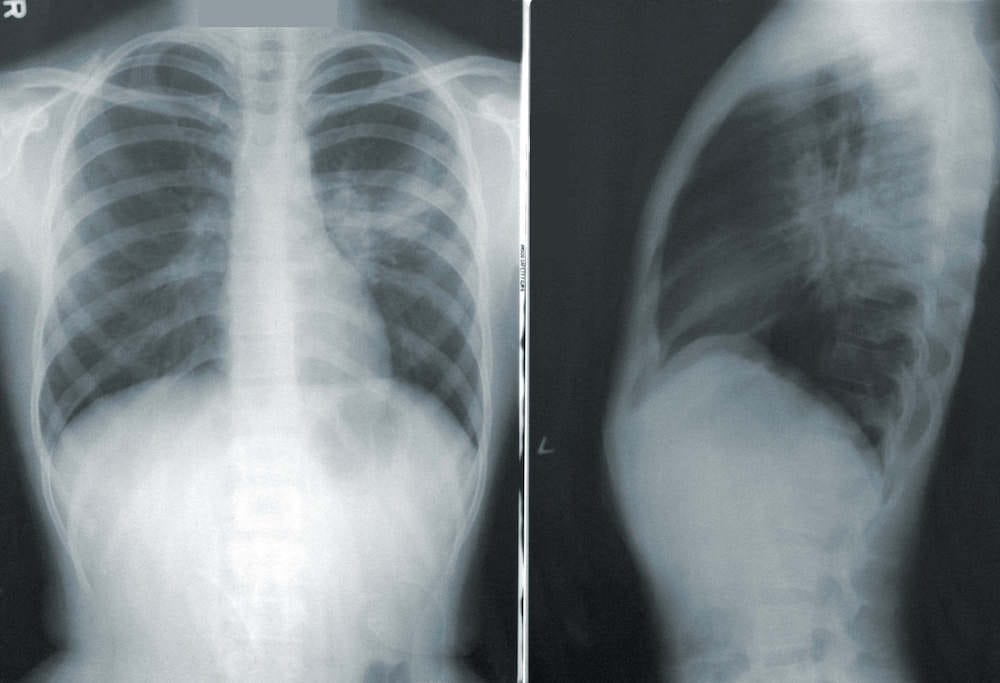
Over the last 18 months the only respiratory infection the world has cared about is that caused by the coronavirus. The visible pandemic that has disrupted every aspect of our lives and killed over 4.5 million people. However, the coronavirus is not the only respiratory infection that scares scientists. Brewing under the surface is an invisible killer that could soon cause its own pandemic to rival that of coronavirus—that of antibiotic resistance.
The culprit: Pseudomonas aeruginosa, a common rod-shaped bacterium that causes lower respiratory tract infections most notably pneumonia. A multidrug resistant strain of P. aeruginosa caused 32,600 infections and 2,700 deaths in the United States in 2017. But don't let the small numbers deceive you, this is the canary in the coal mine sending out a warning.
Thus, there is an urgent need to find non-antibiotic treatments to P. aeruginosa infections—bacteriophages appear to be the answer. Bacteriophages (or phages for short) are viruses that infect and kill bacteria. They tend to come with fewer safety concerns than antibiotics, don't destroy the healthy microbiome, and can even reverse antibiotic resistance, making them a prime tool in the war against P. aeruginosa.
However, while there have been studies into using phages to treat P. aeruginosa infections, they have been heterogenous in design meaning the administration route, duration, and frequency have been variable.
Duplessis et al. set out to change this with their article "Successful Intratracheal Treatment of Phage and Antibiotic Combination Therapy of a Multi-Drug Resistant Pseudomonas aeruginosa Murine Model". They wanted to determine the optimal route for phage delivery and the effect of combining phages with antibiotics verses phages alone.
The team created a mouse model with a P. aeruginosa infection and trialled different injection methods—intraperitoneal, intratracheal, and a combination of the two. Intraperitoneal, like IV, injects phages into the body whereas intratracheal injects phages direct into the lungs at the site of infection. After evaluating bacterial burden in the lungs and lung pathology they found that direct injection into the lungs was the most effective, demonstrating that delivery is key and direct delivery to the disease can make or break a treatment.
In addition, they tested the effect of phages plus meropenem (commonly used antibiotic) verses phages alone. Phages administered with meropenem delayed mortality and improved survival rates but the mechanism is still unknown. Determining such a mechanism and optimal concentration of phages and antibiotics could be the focus of future work along with human trials.
Whilst there is a lot more work to complete before phage therapy against P. aeruginosa becomes readily available for patients, this work is a pivotal step forward. A lot of phage research has focused on the type of phage administered, Duplessis et al., has shown that delivery is just as important.
Many thanks to Atif Khan for finding and summarizing this week's phage news, jobs and community posts, and to Lizzie Richardson and Stephanie Lynch for help editing!

Lizzie Richardson
Lizzie is a Research Assistant at the University of New South Wales. She has a Bachelor of Science and Arts from the University of Sydney and a Masters in Medical Biotechnology from Wageningen University and Research in the Netherlands. Her masters thesis focused on the bacteriophage MS2 and has also been involved in using phages against antibiotic resistance through her startup Agriphage. Due to the coronavirus pandemic, she has ceased work on the startup but is still passionate about this area and wants to help spread the word about antibiotic resistance and phage therapy.