

Issue 23
Phages to treat our most vulnerable patients

Should phage therapy be considered for pregnant women? This week, Dr. Lucy Furfaro introduces the field of perinatal phage research.
Community digest7updates4jobs3posts
Updates
Johanna Sweere and colleagues just published a very exciting paper today in Science! A temperate filamentous phage of Pseudomonas aeruginosa dampens the immune response against P. aeruginosa, which leads to increased P. aeruginosa virulence. (More phage = increased wound severity!) The authors also show that vaccination against this phage works to protect mice against P. aeruginosa. STAT News article | Paper
Announcing a new series of hands-on phage (meta)genomics workshops at this year's Evergreen International Phage Meeting! Workshops will take place Sat, Aug 3, 4-6 pm and 7-9 pm, and Sun, Aug 4, 9-11 am. An open phage genomics and metagenomics discussion will follow (Sun Aug 4, 11:15 am - 1:30 pm). Workshops will be taught by a group of leaders in the field, including Ramy Aziz, Evelien Adrianssens, Alejandro Reyes and Jason Gill.
Workshops are free with conference registration; extra charge only for Saturday night dorm accomodation if needed. If interested, email tescphage@gmail.com and specify whether interested in metagenomics issues and/or phage annotation challenges. Spots are limited. It is possible to sign up for Sunday only. More details to come!
This just in! Videos of many of the 2017 Evergreen International Phage Meeting's talks are now online. Register for the 2019 meeting here.
The Bacteriophage Biology and Therapeutics Special Interest Group is part of the Australian Society for Microbiology. Their goal is to promote collaborative phage work in and outside Australia, so especially if you do phage work in the area, check them out! They also publish a quarterly blog!
This week, several exciting new papers on the evolution of CRISPR-Cas systems were published. One, by Amelia McKitterick and colleagues from the Seed lab at UC Berkeley, shows how a phage-encoded CRISPR-Cas system interferes with an anti-phage island.
Dr. Krystyna Dabrowska of the Institute of Immunology and Experimental Therapy at the Polish Academy of Sciences has just published a systematic and critical review of the phage pharmacokinetics and bioavailability literature (spanning 1924-2016, including non-English reports).
If you want to better understand US laws affecting the development of prescription drugs, and the roles and responsibilities of the FDA, edX (HarvardX) is running an online course called The FDA and Prescription Drugs: Current Controversies in Context. It's free to audit the class, which started this week.
Jobs
PhD student position: Hacking the soil microbiome
In this project we will investigate novel ways of improving the effectiveness of next generation bio-fertilizers – including using naturally occurring mutualistic viruses (temperate phages) which associate with rhizobia to enhance the competitiveness of inoculant strains. Along side these experimental approaches we will explore the societal attractiveness and usefulness of inoculant technologies and practices. Finally, we will design and conduct experiments with growers to understand how they may be able to observe, intervene in, and improve their soil microbiomes through do-it-yourself approaches. Open to students worldwide.
Post-bachelor or post-master's position: Staphylococcus phage therapy
A research opportunity is available in the Division of Bacterial, Parasitic and Allergenic Products (DBPAP) within the Food and Drug Administration (FDA) in Silver Spring, Maryland. This project is aimed at evaluating the use of bacteriophage to treat Staphyloccocus aureus colonization and/or disease in order to better combat multi-antibiotic-resistant bacterial pathogens.
Postdoctoral position: Plant pathogen genomics & bacteriophage interaction
The Wang Laboratory of Molecular Food Safety invites applications for a postdoctoral research fellow position. The successful candidate will execute research on the characterization of the microbial pathogen Rhizobium radiobacter (Agrobacterium tumefaciens) and its interaction with bacteriophages.
Faculty positions: Microbiome and Human Health
We are seeking highly qualified investigators who use definitive approaches to understand the nature of the microbiome and its impact on host physiology and disease susceptibility. Candidates are sought with expertise in areas related to microbiology, including, but not limited to, microbe-microbe interactions, microbehost interactions, microbial ecology, microbial enzymology and biochemistry, bacteriophage therapy, and the role of microbiota in cancer biology and response to immunotherapy.
Community board
Seeking Pseudomonas phages for a canine ear infection
We are seeking Pseudomonas aeruginosa phages to treat a dog's antibiotic-resistant ear infection. Please get in touch with us by email at staff@phage.directory if you are willing to test your phages on the dog's strain, or to send phages on behalf of this dog.
Welcome, new volunteers!
We have our first Phage Directory volunteer! Cathy Nguyen will be helping with Capsid & Tail's What's New and Jobs section. We also welcome our first guest writer this week, Lucy Furfaro!
If you'd like to help (or be kept up to date on other volunteer opportunities), email volunteer@phage.directory. If you'd like to contribute a guest article, email capsid@phage.directory for details.
Thank you to participants of the 2019 Latin America Phage Workshop
Thank you to all the students from Latin America for participating in this 2019 phage course, and special thanks to Martin Loessner and Alejandro Reyes for the amazing lectures and workshop. Hope to see you all soon!
It’s an exciting time to be a phage researcher! Progress has been made at the basic science, clinical and policy levels; highlighting the need for phage therapy. We still have a long road ahead, particularly in generating data from clinical trials, but phage therapy is on its way.
Pregnancy is often ruled out
The level of phage diversity opens up a range of potential applications in terms of which infections to target. There are several factors to consider when determining a suitable clinical scenario, and pregnancy is often ruled out. This vulnerable population really consists of two patients rather than one: the fetus and mother. Protection of these patients is clearly warranted, however, it shouldn’t suggest we simply give up on treatment options for this group.
Bacterial infections can be devastating during pregnancy
Bacterial infections can be devastating when occurring in utero and can lead to babies being born too early (preterm birth); this is associated with significant morbidity and mortality. Immune naivety can allow bacteria to thrive, and this paired with increasing incidence of antimicrobial resistance is cause for concern. Additionally, the ranges of antibiotics that are safe for use in pregnancy are limited even further. Eventually, additional strategies to treat mothers and neonates will need to be explored.
Don’t mess with the microbiome
The expanding interest in microbiome research has also raised questions about the impact that disruption of the commensal microbiota could have on the establishment of newborn babies’ gut microbiota. Although controversy exists in this field in relation to the use of appropriate contamination controls and software for data analysis, it is hard to imagine that our microbial colleagues would not have a significant influence on our health during early life.
Phetal phage?
The estimation that ~31 billion phages are absorbed by the human gut each day emphasises the ubiquity of phages and our constant exposure. With phages isolated from body sites such as the brain, could phages play a role in utero? Lim and colleagues identified phage DNA in amniotic fluid and this may suggest that phages can gain entry to the uterine cavity. This is an area I am particularly interested in, and the data generated from this could help to determine the feasibility of phage therapy in this vulnerable population.
Perinatal phage research
There is a huge scope for perinatal (the time just before and after birth) phage research. This extends beyond use of whole phages, such as the use of lysins to remove the prominent neonatal pathogen Group B Streptococcus from the vagina and/or gut to prevent vertical transmission. This area includes our most vulnerable population, and has the potential to provide exciting future therapeutic strategies. By understanding our exposure to phages in this period, we can begin to assess their influence in shaping our health.
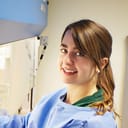
Lucy Furfaro, PhD
Lucy Furfaro is a phage researcher from Perth, Western Australia. After recently passing her PhD in January 2019, she is currently undertaking postdoctoral research with Dr. Matthew Payne at the University of Western Australia and the Women and Infants Research Foundation. Her research has focused on perinatal pathogens including Group B Streptococcus and Ureaplasma spp. and exploring alternative therapeutic options, particularly bacteriophages. The field of perinatal phage research is one she is particularly enthusiastic about researching, and she aims to improve outcomes for mothers and babies in the future.