

Issue 38
Phage Directory expands! What’s changing and what’s staying the same

This week is a special, exciting week for Phage Directory! We’ve got big news pertaining to funding, new directions, and a website makeover! And to balance out all the NEW, our feature article this week focuses on something that’s staying the same: how we handle phage therapy requests, and what we do and don’t do when it comes to helping with compassionate phage therapy cases.
Community digest5updates4jobs2posts
Updates
Phage Directory, expanded
Dear phage fans,
You may have noticed some improvements and differences around the site, and we have some exciting news to share! We've heard lots of feedback over the past year, and we've made some additions and improvements based on what we've heard from the phage community. Plus, we've received funding to move forward with this work!
Read more about our expanded mission and how we got here. Please let us know how we're doing and send us questions and suggestions!
— Jan & Jessica
More focus on phage research and development
Expanded access to phage therapy starts with phage research, clinical trials, data collection, publication, and the collective hard work of the entire phage community.
Phage Directory is expanding its platform to support the community of phage researchers and phage developers in a few ways:
Profiles for phage researchers, labs and organizations
Phage Directory is growing beyond tracking labs for phage therapy. We want to help you find collaborators in the phage community, follow what others are working on, and get noticed for your specific expertise.
Join the Directory if you work with phages, whether you’re a principal investigator, postdoc, student, industry scientist, or whatever your role in the phage world may be.
Add your organization if you're a phage startup or biotech, phage bank, nonprofit, CRO, or an organization that works with phages in any way.
Capsid & Tail is now easier to read and cite
Each article is now easier to read and to cite, and our guest writers can easily get credit for their work. All changes apply to past issues too!
Easily post a job, event, or a message to the Community
Let the phage community know if you have any thoughts or requests, upcoming workshops and conferences, or if you're hiring.
To support our growing phage biotech community, all job posts are now free.
Support from Mozilla!


We’re thrilled to announce that we’ve been awarded a Mozilla Open Science Mini-Grant! We’re extremely grateful to Mozilla and to the Leona M. and Harry B. Helmsley Charitable Trust for getting behind our vision and supporting us as we build the infrastructure to accelerate progress in the phage field through increased openness and collaboration.
With this grant, Phage Directory is funded to begin developing an open source and open access phage tracking and phage data publication platform.
Let's bring phage data and insights online
Our goal is to bring the world’s known phages and associated metadata online, and to make the data open and discoverable. This means ALL phages—not just those useful for therapy.
1. Contribute to an open phage database
Get noticed for what you do, help potential collaborators find you, and help your global peers by listing your lab's phages along with their associated characteristics, papers and patents.
If you’d like to bring your lab’s phage data online, please email us at phages@phage.directory and we’ll be in touch soon.
If you’re concerned about sharing information about your phages, we’d love to hear your perspective too. What kinds of phage data should be public, and what should be private? Is there anything we can do to make you feel more comfortable listing your phages and sharing your insights? Let us know by emailing phages@phage.directory.
2. Get your phage insights published
Publish open access, peer-reviewed phage genome reports and phage characterization reports. We are now open for submissions!
If you're interested in publishing with us, please email us at reports@phage.directory and we’ll send you the author guidelines.

Thinking of attending Phage Futures EU in Brussels this September? Tomorrow (Friday, July 26) is your last chance for early bird rates! Register here & use PD10 for 10% off!
Before now, no virus has been reported to infect ammonia-oxidizing archaea (AOA) from the phylum Thaumarchaeota (ubiquitous marine archaea). However, a new paper by Jong-Geol Kim (Chungbuk National Univ.) and colleagues describes the isolation and characterization of three Nitrosopumilus spindle-shaped viruses that infect AOA. Curiously, viral replication inhibits AOA growth and reduces ammonia oxidation and nitrite reduction, but does not degrade the host chromosome or decrease cell counts.
Wondering about the infective capacity of the phages that make up the gut viromes you're analyzing? Ling Deng (Univ. of Copenhagen) and colleagues have developed an efficient protocol for the extraction of infective viruses from low volume fecal samples. They detect infective viruses from the same samples used for metagenomic sequencing, and they report extracting 48 viromes per working day, with less than 4 h of hands-on time!
Alfred Fillol-Salom (Univ. of Glasgow) and colleagues have uncovered how Gram-negative phage-inducible chromosomal islands (PICIs), a universal class of mobile genetic elements that impact bacterial virulence, hijack phage machinery for their own packaging.
Jobs
Postdoctoral Research Associate: Phage biotechnology
The Talbert Research Group in the Department of Food Science & Human Nutrition at Iowa State University seeks a Postdoctoral Research Associate to join a multidisciplinary group focused on protein chemistry and enzyme technology. The successful candidate will leverage their expertise in genetic engineering and recombinant protein production to support federally funded projects aimed at the design and modification of bacteriophage for biotechnology applications.
Research Associate I/II
Armata is seeking a Research Associate I/II to work with the R&D team. The candidate will support the overall program goals and strategy of the group, which include significant laboratory activities such as phage engineering and characterization, protein expression and preclinical evaluation of phage therapy efficacy in relevant animal models.
Biomedical Technician
The Biomedical Technician shall work with/in Naval Medical Research Center-Frederick Biological Defense Research Directorate’s Genomics Department. The Genomics Department has a mission to apply bioinformatics and cutting edge, high-throughput technologies such as genotypic and phenotypic expression profiling, biomarker characterization, bacteriophage science, etc. to the study of infectious diseases, biodefense, and enhanced global disease surveillance for early pathogen detection and response.
Director of Clinical Microbiology
The Director will provide an important leadership role in Microbiology by overseeing the day to day operation of the ContraFect Microbiology Laboratory and the performance of clinical microbiology development studies in the field of protein-based therapeutics to treat serious bacterial infections. The laboratory is a major site for the conduct of clinical microbiologic testing of our lead compound, CF-301, in support of marketing authorization applications (NDA/BLA, MAA), approval and eventual clinical use if approved.
Community board
Question about phage genome sequencing
I want to sequence my phage genomes. Could someone tell me where to send, and about the cost? Please email me at amnaafmian@gmail.com if you can help.
Seeking Acinetobacter and Pseudomonas phages for research
Hello, I am looking for Acinetobacter baumannii bacteriophages and Pseudomonas aeruginosa phage OMKO1. This is for a research project. If you can help, please contact me at davnogbou2@gmail.com
How we handle requests for phage therapy
Many of you know Phage Directory as a directory that helps people get emergency phage therapy. Although we are expanding our scope to include a much larger focus on supporting phage research, and to support phage use in all industries, we will still continue to help coordinate emergency phage therapy efforts around the world.
We wanted to take this opportunity to make it clear what we ARE doing when it comes to emergency phage therapy, along with a few things we don’t do, just so it’s clear going forward.
We maintain two phage therapy tools for emergency phage therapy purposes:
- Phage Host Directory: A directory, searchable by pathogen, to find labs with phages against a given bacterial target.
- Phage Alerts: A subscription service we use to tell the community when we have an emergency phage hunt going on.
Important points about these tools
- Both the phage host directory and the alert service are opt-in, so they only include labs and individuals who’ve signed up.
- While anyone can subscribe to receive alerts, we only send out alerts when a physician is on board.
Our stance on phage therapy
We believe phage therapy should only be done under the supervision of a physician. When a patient or patient family member reaches out to us asking for phages, we find out first whether they’ve spoken to their physician about phage therapy.
Where do our phage requests come from?
Most of our phage therapy requests come from patients or family members of patients, and they rarely come from physicians. Because of this, most requests do not result in alerts being sent out or phages being exchanged.
How we handle phage requests
If a patient does not have a physician willing to try phage therapy
Usually, patients who contact us either haven’t talked to their doctor, or they’ve tried, but their doctor does not wish to pursue phage therapy. In these cases, we do not send out a phage alert, but instead we explain that phage therapy can be done at the Eliava Institute, the Phage Therapy Unit in Wroclaw, the Queen Astrid Military Hospital, or IPATH. We provide links and contact info for these centers (find these on our Phage Therapy page here). It’s then up to the patient whether or not they seek phage therapy at these centers.
If a patient can’t or doesn’t wish to travel for phage therapy
Understandably, many patients are not in a position to travel to another country for phage therapy. If this is the case, we return to the question of whether they have a physician on board who will agree to provide phage therapy for them.
If the patient cannot or will not travel for phage therapy, and cannot find a local physician to attempt phage therapy on their behalf, we offer to help them find a physician in their area.
If a patient’s physician is willing to try phage therapy
If a patient has a physician on board, we speak with the physician about what we can do to help them find sources of phages. If they wish to put out a phage alert, we put that together for them and send it to our subscribers.
We identify phage labs willing to help test and prepare phages for the patient, and we connect the physician with other physicians in our network who have done phage therapy before.
From there, the physician takes the reins and approaches the relevant regulatory agency, and our role becomes one of connecting researchers with the treating physician, making sure everyone has each other’s shipping addresses, answering basic questions about what’s been done and what needs to be done, etc.
Learn more about how we’ve done this in the past:
- McCallin, S., Sacher, J. C., Zheng, J., and Chan, B. K. (2019) Current State of Compassionate Phage Therapy. Viruses, 11(4), 343. DOI: 10.3390/v11040343
- Sacher, J. C., McCallin, S., and Zheng, J. (2019) Sourcing Phages for Compassionate Use. Microbiology Australia
- Our Capsid & Tail articles on phage crowdsourcing here and here
When no phages can be found
Even if a physician is on board, sometimes, a patient is dealing with an infection for which no phage therapy center has phages (e.g. Mycoplasma, Ureaplasma infections), and no research labs respond to our phage alert.
In these cases, we may send out a tweet asking the phage community whether anyone knows of research labs working on these phages. We do a search of the literature and we reach out to labs who have published on these organisms in the context of phages. Usually, this doesn’t turn up much, and we have to tell the patient that there’s nothing we can do, other than to keep them posted if we do find out about a lab working on the kind of phages they need.
What we don’t do
We don’t provide medical advice, and we don’t store patient medical information. We don’t help patients find phages to treat themselves on their own. We don’t have our own phages, and we don’t do any of the wet lab work related to preparing phages.
Summary
We help physicians find research labs that can provide phages for emergency medical cases. When we receive a request for phages from a patient or patient family member, the first thing we do is emphasize that phage therapy should be done under the supervision of a physician.
If the patient cannot find a physician willing to try phage therapy with them, we provide information about phage therapy centers abroad.
If a patient’s physician is on board, we speak to the physician about what we can do to help them source phages for their patient.
We maintain two tools for emergency phage therapy cases: a self-serve directory of labs and their phages and an alert service we use to send emergency phage requests to the phage community (the latter are only sent out when a physician is involved).
After we send out a phage alert, labs willing to help get in touch with us by email. We connect labs with the treating physician, and if needed, we help guide labs through the process of helping with the case.
Get in touch with us!
If you’re a physician or a researcher working with physicians on phage therapy cases, know that you can always get in touch with us by emailing therapy@phage.directory.
We’re happy to help you find labs, phages, other physicians with phage therapy experience, get answers to your shipping or regulatory questions, and more. And if we can’t answer your question, we’ll do our best to connect you with someone in the community who can.

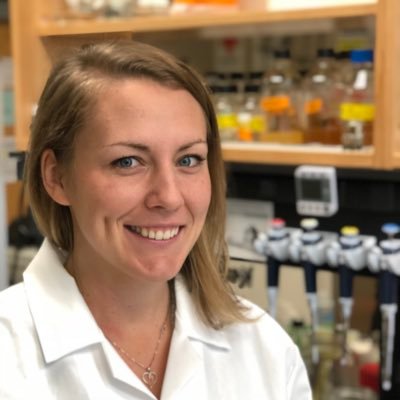
Jessica Sacher, PhD
I'm a co-founder of Phage Directory and have a PhD in Microbiology from the University of Alberta (I studied Campylobacter phage biology). For Phage Directory, I help physicians find phages for their patients, and I'm always trying to find new ways to help the phage field grow (especially through connecting people and highlighting awesome stuff I see happening in the field).
I spent 2022-2024 as a postdoc in Jon Iredell's group at Westmead Institute for Medical Research in Sydney, Australia, helping get Phage Australia off the ground. I helped set up workflows for phage sourcing, biobanking, diagnostics, production, purification and QC of therapeutic phage batches, and helped build data collection systems to track everything we did. We treated more than a dozen patients in our first year, and I'm so proud of that!
As of 2024, I joined the Bollyky lab at Stanford University as a Staff Scientist, where I'm focused on phage engineering and delivery (to both microbial and human cells) and hydrogel-embedded phage cocktail development for wounds!