

Issue 118
Phage therapy: The Australian experience

Earlier this month we hosted PHAVES #13, a talk by Prof. Jonathan Iredell, who shared his group's experience with phage therapy at the Westmead Institute for Medical Research in Sydney, Australia. Here's the recording, along with a recap by Stephanie Lynch!

Community digest5updates1job2posts
Updates
Steven Sutcliffe (McGill University), Michael Shamash and colleagues published a new paper in Viruses showing how common medications lead to prophage induction in human gut bacteria. They tested anti-inflammatory, chemotherapy, mild analgesic, cardiac, and antibiotic drug classes, and found that bacteria were inhibited by most of these drugs, and prophages were induced in half of those cases. They even saw that induction was species-specific (inducing prophages in Clostridium beijerinckii, Bacteroides caccae, and Bacteroides eggerthii)!
Ahmad Hassan (Agriculture and Agri-Food Canada and University of Guelph) and colleagues published a new review on phages as both friends and foes in therapeutic and biocontrol applications. They first detail the reasons for the antimicrobial resistance (AMR) crisis and the possible role of phages in spreading AMR, then describe the constructive applications of phages as tools in multiple fields to combat AMR.
Milan Gerovac (University of Würzburg, Germany) and colleagues published a new paper in MBio — they used Grad-seq (gradient profiling by sequencing) to get a comprehensive view of RNA and protein complexes in Pseudomonas aeruginosa under standard and phage predation conditions. They identify many new insights about phage-host interactions, new phage noncoding RNAs, and much more!
Karishma Bisht (Texas Tech University) and colleagues published a new paper in npj Biofilms and Microbiomes showing the impact of temperature-dependent phage expression on Pseudomonas aeruginosa biofilm formation. Their work suggests that phage proteins could be a possible therapeutic target in biofilm-associated infections.
Phage has made the Washington Post! The article, written by Daphne Miller, a clinical professor at UCSF, describes how most viruses around us are benign, while some are lifesaving. She interviews Saima Aslam, Paul Turner, and Ken Cadwell about their thoughts and work in the space. Perhaps a good one to share with your friends and family!
Jobs
The Barrick Lab at the University of Texas at Austin has an open NIH-funded position for a postdoctoral fellow in the area of phage engineering and experimental evolution.
Community board
Sandro Sulakvelidze, CEO of Intralytix, talks phages for food poisoning in this podcast episode by Gastropod entitled 'Phage against the machine'. Gastropod looks at food through the lens of science and history.
Phage Directory (& friends) are now on Clubhouse! This is a new app for drop-in audio-only discussions around a topic. It's still only for iPhone users, and requires an invite, so ask around (or ask us!) if you need one. We've now hosted two Wednesday night events (9PM Eastern) and will host another this coming Wed, March 24 at the same time. The topic will be on navigating phage therapy in the US via the FDA eIND pathway, along with what to say when approached by a prospective patient for phage therapy. Sign up for "Phage Club" within clubhouse to get notified about future events!
For PHAVES 13 earlier this month, we hosted Professor Jonathan Iredell, the Director at the Centre for Infectious Diseases and Microbiology at the Westmead Institute for Medical Research and a Professor of Medicine and Microbiology at the University of Sydney.
Watch the recording here if you missed it, or check out Stephanie Lynch's recap of the seminar below!
Phage therapy: The Australian Experience, with Prof. Jonathan Iredell
Highlights of Prof. Iredell's talk
- Prof. Iredell began by highlighting a case series his group published on the use of phage therapy in patients. They administered phage therapy to 13 patients with severe Staphylococcus aureus infections with support from the company now known as Armata Biosciences. He also described successful phage therapy his team used back in 2011 to treat a woman suffering a urinary tract infection. Most recently, he described the use of phage to treat a chronic osteoarticular infection in a child in 2019, who was treated by Dr. Ameneh Khatami in collaboration with the Iredell group. The latter two were both caused by the pathogen Pseudomonas aeruginosa.
- The use of phage therapy in this child has become a poster success story for phage therapy in Australia. To make this happen in 2019, Prof. Iredell and his colleagues reached out to Phage Directory, who then reached out to the phage community to help source anti-Pseudomonas phages. The phage they used in the end was made available by Adaptive Phage Therapeutics and subsequently administered to the patient for a successful outcome. Dr. Ameneh Khatami at the Children's Hospital at Westmead was the treating physician, and the Iredell group performed the lab work.
Prof. Iredell then spoke about the pipeline leading up to phage therapy in patients;
- Collection: To start the collection and screening of phages, there is a need for good quality bacterial collections. Prof. Iredell described work from his team using the phage phenotypes to infer whether the selected phages will be effective on the representative bacterial sets. This can be used as a starting point to assess and develop good phages.
- Selection & testing: Once the phage is selected, further testing or characterisation is required. Tests such as Efficiency of Plating (EOP) and growth curves are preferred as they are quick, easy, automated and high-throughput.
- Monitoring: Administration of the selected and characterised phage to the patient requires monitoring. Prof. Iredell mentioned monitoring to see whether there is predictability of the phage in an infection or whether in-depth phage monitoring will be routine.
- Prof. Iredell also mentioned the importance of bacteriology as a companion to phage therapy, ie. national surveillance program of microbes/outbreaks. A good functional phage collection/bank needs to be run in parallel to this. He also emphasised the importance of "locally" sourced phages, ie. know your flora and fauna.
- He outlined the importance of a clinical network that can implement phage therapy, as well as educate the clinical workforce about misconceptions of phage therapy (with a good dose of skepticism).
- To that end, he finished up by speaking about the newly launched Australian Phage Network (#AusPhageNetwork) in connecting phage researchers, phage and strain collections, and physicians, that have the capacity to monitor the patients receiving phage therapy. He also highlighted the need for a ‘passport’ system of phages that is compatible with international standards and standardised diagnostics for phage therapies (selection and monitoring). He pointed to a recent paper his group published, which details the Australian Phage Network's aims to create a phage biobanking system to improve the reproducibility, safety and speed of provision of suitable phages, which was coauthored with Pieter-Jan Ceyssens of Sciensano and Phage Directory, along with other collaborators that make up the Australian Phage Network.
Further reading
- Nature Microbiology blog post by Ruby Lin, Jon Iredell and Ameneh Khatami on the Australian Phage Network
- First paper by the Australian Phage Network in Current Opinion in Biotechnology: Phage Biobank: Present Challenges and Future Perspectives
Thanks to Atif Khan for contributing summaries for the What's New section this week!
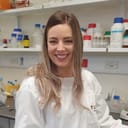
Stephanie Lynch, PhD
Stephanie is a postdoctoral researcher for the Iredell Group at Westmead Institute for Medical Research, NSW. Her project focuses on phage therapy for compassionate human cases (as part of Phage Australia), with a particular interest in Staphylococcal phages. In 2021, Stephanie completed her thesis titled ‘Exploring phage therapy for Staphylococcus pseudintermedius infections in canines'. Steph is always willing to chat about phage research and would like to connect with phage biotech companies.