

Issue 40
State of the regulatory affair: Regulation of phage therapy in Australia
 Ruby CY Lin
 Aleksandra Petrovic Fabijan
 Lani Attwood
 Jon Iredell
This week, phage researchers and clinicians from the Westmead Institute and Westmead Hospital brief us on how phage therapy is regulated in Australia, through the lens of their experience treating 14 patients with IV phage therapy.

Community digest5updates1job1post
Updates
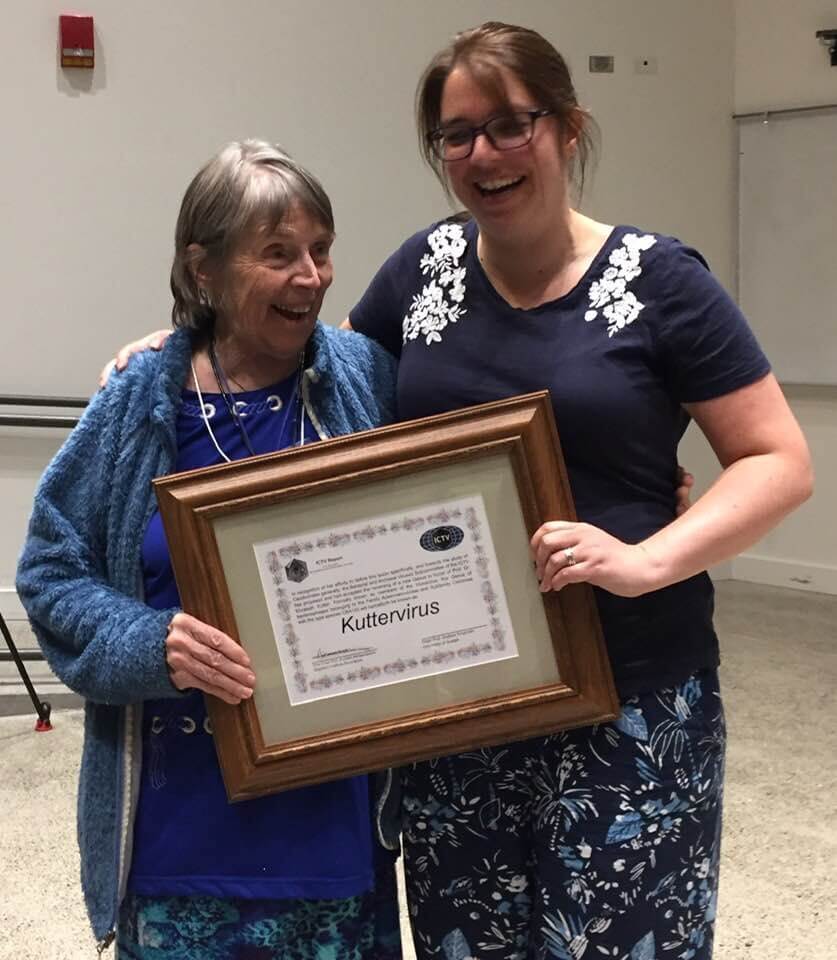
The 2019 Evergreen International Phage Meeting has come to a close — it was so great meeting so many phage biologists there! Among several highlights, which we'll summarize in a future issue, the International Committee on Taxonomy of Viruses (ICTV) officially named a new viral genus, Kuttervirus, after Evergreen's esteemed organizer, the legendary Betty Kutter. Photo credit: Gail Christie
Camille d’Humières and colleagues at the Université Paris Diderot and the Institut Pasteur describe a simple, cost-effective way to analyse the gut phageome: from phage isolation to bioinformatics.
A new paper published by Zachary Storms and colleagues in the Sauvageau lab at the University of Alberta describes a method for high-throughput quantification of phage virulence that can be applied to phage screening, evaluation of phage strains, phage mutants, infection conditions, susceptibility of host strains, and phage cocktail formulation. This paper was published in the preview edition of the new Mary Ann Liebert journal, "PHAGE".
Have you heard about the similarities between the Caudovirales (tailed phages) and the Herpesevirales (a eukaryotic viral order)? Juan Andrade-Martinez and colleagues at the Universidad de los Andes in Colombia compared 2000 Caudovirales genomes and 600 Herpesvirales genomes, and have shown strong evidence for an evolutionary relationship between the two orders.
Jeremy Barr, who runs a phage lab at Monash University, was interviewed about his work and career on the Meet the Microbiologist podcast. 45 min.
Jobs
Postdoctoral position: Gut phageomics
The advertised position is within APC’s Gut Phageomics Laboratory, consisting of over 20 researchers investigating the role of the gut bacteriophages in health and disease. The Post-Doctoral Researcher will work within this lab as part of the APC’s ‘Gut Phageomics Spoke’ which is collaborating with a major multi-national pharmaceutical company to explore the role of bacteriophages in shaping the human gut microbiome.
Community board
Student project: Phage Field Expert Survey
We are MPH graduate students from California State University, San Marcos, and this survey is for our capstone project on phage therapy. Due to the limited human clinical cases in the literature, we were advised to interview/survey phage experts in the field. The questions pertain to how/whether phage therapy is done in your area, and your thoughts and recommendations regarding phage therapy. We hope to collect responses between now and early/mid September.
Phage therapy: a solution for antibiotic resistance?
Phage therapy is gaining traction in the age of rising antibiotic resistance. Historically, phages have been known to behave like antiseptics and antibiotics, but a crucial aspect of their applicability as antibacterials is their capacity to be applied directly to living tissues without causing harm. An additional attractive characteristic is their selective activity against specific microbes, leaving existing useful microbiota intact. This narrow spectrum of activity can be exploited in the clinic in a phage cocktail with a defined antibacterial spectrum, or as bespoke (personalised) therapy. We are now seeing the commercialisation of natural and synthetic phages for clinical and industrial applications.
Human phage therapy in Australia: safe and tolerable, but still experimental
Recent studies in Australian centres of both intranasal instillation and intravenous injection of high-purity preparations of anti-staphylococcal phage have demonstrated safety and tolerability. The treatment, however, is not readily available to the general public and is prescribed only by trained health practitioners under defined conditions and protocols.
Our study: 14 patients treated with IV phage
We recently completed the largest single, uncontrolled, open-label, interventional clinical study at Westmead, Australia (n=39 referred, n=14 treated) of intravenous (IV) phage therapy in severe sepsis, where fourteen patients with severe Staphylococcus aureus infections received a GMP (Good Manufacturing Practice)-quality 3-phage cocktail product (AB-SA01, Armata Pharmaceuticals) as adjunct to standard of care, delivered IV twice daily for two weeks.
How our study was regulated
The US Food and Drug Administration (FDA) and the Australian Therapeutic Good Administration (TGA) both considered phage as an investigational drug during this study.
We conducted our study according to two TGA pathways: the Special Access Scheme (SAS) and the Clinical Trial Notification (CTN) scheme.
Special Access Scheme
Critically-ill patients were treated with AB-SA01 under the auspices of the TGA’s Special Access Scheme (SAS). This pathway is for health practitioners who wish to access therapeutic goods that are not listed on the Australian Register of Therapeutic Goods (e.g. phages), and as such, cannot be used for the purposes of conducting a clinical trial.
Treatment under the SAS is provided under a compassionate basis. Accordingly, clinical data and sampling is expected to be consistent with standard of care (including informed consent) and to be directed toward monitoring of patient safety rather than research purposes.
Clinical Trial Notification (CTN)
CTN is a notification scheme to the TGA. The TGA relies on the research institution's Human Research Ethics Committee and research sponsor (Local Health District) to review and approve the research protocols. After approval of the research protocols, the TGA is notified about the trial.
This pathway allows patient sampling according to ethically approved research protocols, and permits relevant further scientific investigations (i.e., whole genome sequencing of gut microbiome, environmental swabs, gene expression profiling of blood and valve from patients, phage kinetics in vivo, etc) under informed consent.
A third pathway: Clinical Trial Exemption
There is also a third pathway by which phage therapy can theoretically be regulated in Australia: Clinical Trial Exemption (CTX). This pathway is generally designed for complex therapies such as cell- or tissue-based products or novel treatments. Under the CTX scheme, the data about the product is reviewed by the TGA before commencement of the clinical trial.
The main determining factor to proceed according to the CTN or CTX scheme is whether the local Human Research Ethics Committee has access to the scientific and technical expertise required to assess the safety of the product.
For example, if our lab were to generate our own phage and/or phage cocktail according to GMP standards, the CTX route would apply. In the trial we describe here, however, we were able to provide the Westmead Hospital's Human Research Ethics Committee with evidence of the safety of the phage cocktail we used. Therefore, we could proceed according to the CTN instead of the CTX pathway.
A place for therapeutic phages in Australia: not yet settled
The classification of phage under the TGA's Biological Framework is not entirely clear, and this has meant that the place of therapeutic phages is not yet fully settled within the Australian regulatory framework.
At present, phage preparations are classified as investigational drugs. An application to use natural phages prepared in the laboratory to GMP standards, including exclusion of toxigenic impurities (e.g. FDA endotoxin limit for parenteral drug products is 175 EU/mL or 5 EU/kg), might therefore be allowed under the auspices of either the CTN or CTX (for research protocols) or SAS (for individual use on a compassionate basis) to treat patients in Australia.
Where to from here?
Ideally, randomised controlled trials using phages either as a cocktail preparation or through bespoke matching to a specific infection (magistral preparation route) would inform clinicians and scientists of how effective phage therapy is. From our initial experience, it is advisable that a multidisciplinary team should be engaged for such an approach.
Furthermore, advancement in synthetic biology opens up the application of synthetic phage in the clinical space, and this adds another level of complexity for regulatory bodies worldwide. The biological framework to classify such will need further discussion. For now, phage therapy has at least captured the imagination of the medical community.
References
- Gilbey, T, Ho, J, Cooley, L, Petrovic-Fabijan, A, Iredell, J. Adjunctive bacteriophage therapy for prosthetic valve endocarditis due to Staphylococcus aureus. Medical Journal of Australia 2019; https://doi.org/10.5694/mja2.50274
- Petrovic Fabijan, A, Ben Zakour, NL, Ho, J, Lin, RCY, Iredell, J. Polyclonal Staphylococcus aureus bacteremia. Annals of Internal Medicine 2019. In press.
- Maddocks, S, Petrovic Fabijan, A, Ho, J, Lin, RCY, Ben Zakour, NL, Dugan, C, Kliman, I, Branston, S, Morales, S, Iredell, JR. Bacteriophage therapy of ventilator-associated pneumonia and empyema caused by Pseudomonas aeruginosa. American Journal of Respiratory and Critical Care Medicine 2019. Provisionally accepted.
- Petrovic Fabijan, A. P., Lin, R. C., Ho, J., Maddocks, S., & Iredell, J. R. (2019). Safety and Tolerability of Bacteriophage Therapy in Severe Staphylococcus aureus Infection. bioRxiv, 619999. https://www.biorxiv.org/content/10.1101/619999v1.full
- Pirnay, JP, Verbeken, G, Ceyssens, PJ, Huys, I, De Vos, D, Ameloot, C, Fauconnier, A. The Magistral Phage. Viruses. 2018;10(2):64. doi:10.3390/v10020064
- Dedrick, RM, Guerrero-Bustamante, CA, Garlena, RA, Russell, DA, Ford, K, Harris, K, Glimour KC, Soothill, J, Jacobs-Sera, D, Schooley, RT, Hatfull, GF, Spencer, H. Engineered bacteriophages for treatment of a patient with a disseminated drug-resistant Mycobacterium abscessus. Nature Medicine 2019; https://doi.org/10.1038/s41591-019-0437-z

Ruby CY Lin, PhD
Ruby joined the Iredell lab at the end of 2017 after a short stint in industry. She is the project manager for Iredell lab and the scientific lead for an investigator-led clinical trial involving treatment of severe Staphylococcal infections using bacteriophage therapy. Her research focus has been microRNA driven dysfunctions in eukaryotic disease model systems including mouse/rat models and humans. She was a named NHMRC Peter Doherty fellow, 2005-8 and UNSW Global postdoctoral fellow, 2009-14. She has acquired >A$5.1m in competitive funding. In her spare time she volunteers as the primary ethics coordinator at her kids’ school and does pro bono work as a career coach.

Aleksandra Petrovic Fabijan, PhD
Aleksandra obtained her Bachelor, Master and PhD in Biology at University of Novi Sad, Serbia. She is working as a Phage Biologist at Westmead Institute for Medical Research (Sydney, Australia) where she is investigating bacteria-bacteriophage interaction and host response in septic patients receiving adjunctive bacteriophage therapy.

Lani Attwood
Lani Attwood is the Research Governance Manager for Western Sydney Local Health District, Sydney, Australia. Lani provides risk management and regulatory advice to research teams working within Western Sydney Local Health District and co-ordinates institutional approvals for research within the district.

Jon Iredell, MBBS PhD FRACP FRCPA FFScRCPA FASM
Prof Iredell originally trained as an intensivist and is one of the few Infectious Diseases physicians and the only formally qualified clinical Microbiologist with full professional membership of the ANZ Intensive Care Society. He is Director of the Centre for Infectious Diseases & Microbiology (CIDM) Laboratory Services, Westmead Hospital, Professor of Medicine and Microbiology (conjoint) at Sydney Medical School, senior staff microbiologist in NSW Pathology and NHMRC Practitioner Fellow since 2011. He has secured millions of research funding with infectious diseases focus.