

Issue 46
Using Galaxy for phage genome annotation

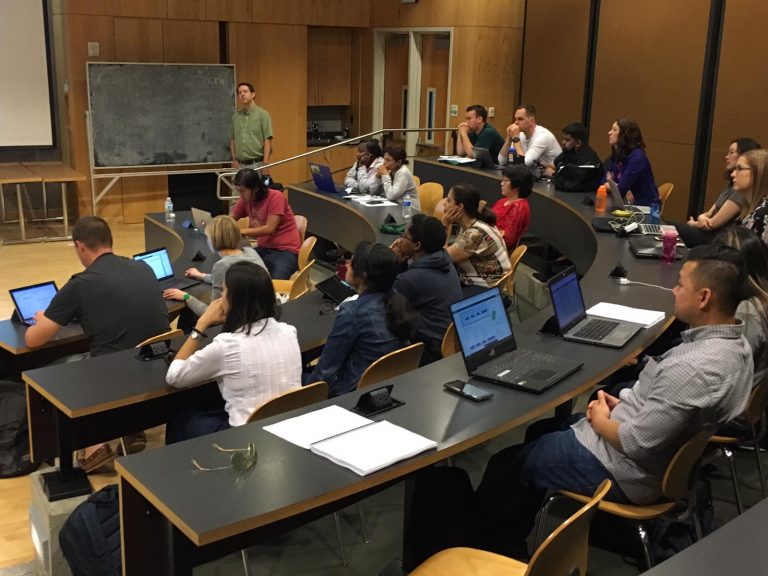
This week, we're covering an introductory phage genome annotation workshop that was taught at the 2019 Evergreen Phage Conference. The workshop, Phage Genomics with Galaxy and Apollo, was taught by Jason Gill, a professor at the Center for Phage Technology at Texas A&M University.
Community digest6updates1job5posts
Updates
Big news! NIH (NIAID) has put out a request for applications for translational phage research to inform phage therapy! If you're interested in applying and are looking for particular expertise to add to your proposal, or have expertise to share and want to join a consortium and apply for this grant, email capsid@phage.directory and we'll help connect you with others.
A multidisciplinary research team including Sam Nugen's group at Cornell University, Betty Kutter's group at Evergreen State College, and Lone Brøndsted's group at the University of Copenhagen, has received a $2.6 million NIH grant to study phage-based detection of pathogens in drinking water. They'll be developing methods of rapidly customizing the host range of magnetic phages to improve pathogen sensing.
Jolien Onsea and colleagues from KU Leuven, University Hospitals Leuven, and the Queen Astrid Military Hospital in Belgium successfully used phage therapy to treat four patients with severe musculoskeletal infections. Importantly, the authors developed a standardized treatment protocol for use of phages to treat similar infections. This includes assembling a "multidisciplinary phage task force" consisting of infectious disease specialists, pharmacists, microbiologists, surgeons, and phage scientists, and documenting all results in a database to inform future studies.
Hans Duyvejonck and colleagues at Ghent University and the Queen Astrid Military Hospital in Belgium have published a paper evaluating the use of qPCR to quantify 5 phages within a cocktail. They compared qPCR to plaque assays, and showed that the qPCR/plaque assay ratio was phage-specific and reproducible. Their results suggest that if a qPCR/plaque assay ratio is determined for a given phage, qPCR can be reliably used to approximate numbers of infectious particles, which could save a lot of time in (especially clinical) phage studies.
The phage biotech company BiomX has presented in vivo data that shows successful intra-tumoural delivery of phages to Fusobacterium nucleatum, bacteria that reside inside tumours and whose presence is thought to protect tumours from chemotherapy. The phages were administered IV to a mouse model of colorectal cancer, and they saw that the delivered phages could successfully infect the intra-tumoral F. nucleatum.
Wolbachia are bacteria that are transmitted among female arthropods, sometimes killing males of their hosts. Jessamyn Perlmutter of Vanderbilt University and colleagues have shown that a single Wolbachia prophage gene may be responsible for male killing in insects. This discovery may inform the use of male killing in pest control strategies, and highlights a role for phages in arthropod biology.
Jobs
Postdoctoral position: Gut phage dynamics in Inflammatory Bowel Disease
We are hiring a post doc to work on gut phages in IBD! If you are interested in metagenomics and phage biology and fancy living three years in beautiful Paris, please get in touch.
This is a funded 3-year position open from June 2020. The successful candidate will work at the interface between the fundamental and clinical research on characterization of virome dynamics associated with faecal, mucosal and blood samples of IBD patients. Contact: luisa.de_sordi@sorbonne-universite.fr.
Community board
Welcome new Phage Directory members!
Between July 26 and Sep. 30, we welcomed:
-
16 phage professionals Ael Hardy, Anna Dragos, Cesar de la Fuente, Christine Thompson, Fatma Abdelrahman, Francesca Hodges, Geoffrey Hutinet, Hardian Susilo Addy, Jared Schlechte, Jonas Van Belleghem, Karen Weynberg, Ligia Ayala Navarrete, Milan Bunata, Nayeem Bari, Sam Nugen, Tim Blower.
-
4 phage research labs KeRis Terapi Bakteriofag, Blower Lab, Food Micro Lab, Nnadi Lab
-
9 phage companies Bacteriophage & Drug Development Consultants, Cellexus, Clean Cells, Jafral, MB Pharma, PhagoMed Biopharma, PhagePro, SciPhage, Vetophage.
How can I join the community?
Sign up here!
Invitation to submit to "Phage Diversity for Research and Application” issue of Antibiotics
I recently accepted to serve as Guest Editor for the Special Issue “Phage Diversity for Research and Application” of the journal Antibiotics. I would be very pleased if you agreed to contribute a research paper, or a comprehensive review on any research aspect related to phage diversity. The deadline for manuscript submissions is 1 June 2020. The articles will be published upon acceptance, on an ongoing basis.
Antibiotics is a peer-reviewed open access journal on all aspects of antibiotics. It has an impact factor of 2.921 and is indexed in SCIE (Web of Science), Scopus, and PubMed. The Article Processing Charge of 1200 CHF applies to all papers accepted after peer review.
In order for us to plan this Special Issue, we kindly ask you to inform us as to whether you are interested in contributing to this issue.
Many thanks, Christine Rohde
Seeking job in phage research field
I am looking for jobs in the phage research field. I have almost fifteen years’ experience in phage research particularly on phage genomics and phage therapy in animal, insect and plant models. I have developed a phage based product. It is on the verge of commercialization now. Please contact me at mdas@tamu.edu if you know any possible opportunities.
Seeking postdoctoral position
I am seeking a post-doctoral position related to Bacteriophage therapy, Antibiotic Resistance and Biofilm studies. The main objective of my Ph.D. thesis was to study the predominant bacterial isolates of septic wound infections, isolation and characterization of bacteriophages against biofilms of multi drug resistant P. aeruginosa, S. aureus, K. pneumoniae, and E. coli, and application of respective bacteriophages and phage cocktails on the single & dual species biofilms of these predominant bacterial isolates of septic wound infections. Please email me at p.rojarani.virology@gmail.com if you know of any opportunities.
Seeking method for detecting HGT in sequenced genomes
Does anyone have a robust and reliable method that they like for auto detecting HGT in completely sequence genomes? I was playing with HGTecor last week but it seems to be broken. Help? —@DrHHNZ | Tweet thread
At this year's Evergreen Phage Conference (here's our recap), there were three bioinformatics workshops. This week, we're covering one of them: Phage Genomics with Galaxy and Apollo. The workshop was taught by Dr. Jason Gill, a professor at the Center for Phage Technology at Texas A&M. Before the workshop, we had a primer on phage genome annotation from Dr. Ramy Aziz of Cairo University. The goal of this week's article is to give a brief overview of what we learned about phage genome annotation from both.
Annotation for beginners
Before the workshop began, a show of hands showed that very few participants had annotated a genome before (myself included!).
What is annotation?
Even though we commonly hear talk of what annotation means, and we probably generally know it's required, what does it actually entail? Essentially, once you have a fresh genome sequence, you need to "call genes"; this means figuring out where each gene (likely) starts and stops. After that, each hypothetical gene is checked against a database of other genes to assign it a likely function. All of this data (on where genes start and stop, and what they likely encode for) is then ideally stored along with the genome sequence, and this "annotated genome" is typically submitted to a database (like GenBank) so others can see it and compare it to their own genomes.
Annotation tools
There are a lot of computational tools available for genome annotation, but there's no one tool to do it all. Rather, to get a reasonably accurate annotation for your new genome sequence, a good approach is to use several different tools (some that look for the starts of genes, some that look for stop codons, some that look for tRNA genes, some that look for terminators, some that are more stringent, others more relaxed, and so on). During and after the process, a discerning eye to catch when the computer suggests something that doesn't make sense is also key to an accurately annotated genome.
What is Galaxy?
Galaxy is a web-based bioinformatics platform that can be used for genome annotation, among other things (you can also use it to do genome assembly, comparative genomics, mutational analysis, and more). It's a way of using a multitude of different bioinformatics tools available, like BLAST and SPAdes, without needing to use command line, write code, or manually track what you’ve done (it tracks it for you!). It has a lot of file converters built into it, meaning you don't need to worry about converting your sequence data into different file formats according to the requirements of each tool.
What is WebApollo?
Galaxy has an interactive genome visualizer built into it called WebApollo. It even allows collaborative genome annotation (like Google Docs, but for genomes). WebApollo is key to why Galaxy is easy to use.
The Evergreen Galaxy Workshop
In the first half of the workshop, we spent a couple of hours learning about Galaxy and how the Center for Phage Technology (CPT) at Texas A&M uses it (it has developed its own instance of Galaxy that’s tailored to phages). Fortunately, this was a beginner-friendly workshop (I am most definitely a beginner, and I didn't feel lost!).
The second half of the workshop involved us all with our laptops out, working through annotating a sample genome. This was incredibly informative, and made me realize that contrary to how I felt during grad school, phage annotation needn’t be fear-inducing.
Bonus advice: overcall genes!
Jason's advice on calling genes: overcall them! (At least you’ll have some data, which you can analyze further using tools like BLAST; you can always delete called genes later).
Comparing Galaxy with PATRIC for genome annotation
Another Evergreen workshop covered using PATRIC for genome annotation. Differently from PATRIC, annotation via Galaxy is a lot more manual, which has both pros and cons. For instance, you call each gene based on a few predicted possibilities (you choose the one that looks most likely to be correct). This lets you catch errors and bring in more of a discerning eye, and yet on the other hand, this method takes longer, and of course subjectivity comes into play when one does it this way.
A hands-on teaching tool
Jason highlighted that Galaxy can be much better as a teaching tool than something more automated like PATRIC, since Galaxy annotation is more hands-on. Students can see and learn all the steps involved (it's less of a “black box”).
Accessing Galaxy
Anyone can use the CPT’s instance of Galaxy; you can get a free account and access it from anywhere.
Where can I learn more?
The CPT has a great website with all the tools and tutorials you could want related to Galaxy.
Constantly improving
The CPT writes a lot of bioinformatics tools in house, and they're in constant talks with Apollo regarding how to improve the software.
Other Evergreen bioinformatics workshops
There were also two other bioinformatics workshops at Evergreen this year: one on annotating genomes with PATRIC (taught by Maulik Shukla and Rebecca Wattam) and one on viromics taught by Evelien Adriaenssens and Alejandro Reyes. We plan to cover these topics in the future.
More bioinformatics in Capsid & Tail
We're aiming to start covering bioinformatics more frequently in our second year (which is already around the corner!). If you've got something to teach the phage community on any aspect of phage bioinformatics, whether it's a paper to cover, a tool to explain, or something else, we'd love to have you as a guest writer! Email capsid@phage.directory if interested, or if you'd like more info.

Jessica Sacher, PhD
I'm a co-founder of Phage Directory and have a PhD in Microbiology from the University of Alberta (I studied Campylobacter phage biology). For Phage Directory, I help physicians find phages for their patients, and I'm always trying to find new ways to help the phage field grow (especially through connecting people and highlighting awesome stuff I see happening in the field).
I spent 2022-2024 as a postdoc in Jon Iredell's group at Westmead Institute for Medical Research in Sydney, Australia, helping get Phage Australia off the ground. I helped set up workflows for phage sourcing, biobanking, diagnostics, production, purification and QC of therapeutic phage batches, and helped build data collection systems to track everything we did. We treated more than a dozen patients in our first year, and I'm so proud of that!
As of 2024, I joined the Bollyky lab at Stanford University as a Staff Scientist, where I'm focused on phage engineering and delivery (to both microbial and human cells) and hydrogel-embedded phage cocktail development for wounds!