

Issue 50
MB Pharma: Building on phage therapy traditions in the Czech Republic

This week, Milan Buňata of MB Pharma, a Czech company that's recently gotten into phage, tells us about phage therapy traditions in the Czech Republic, what their company is working toward, and their interest in collaborating with the phage community.
Community digest5updates4jobs1post
Updates
Why do bacteria evolve CRISPR-based phage resistance in natural environments, while in the lab, they seem to more readily evolve receptor-based resistance? Ellinor Alseth (University of Exeter) and colleagues have published a new paper digging into this discrepency. Their results show that in the presence of other human pathogens, the fitness consequences of altering phage receptors are higher. This likely explains why in vivo, CRISPR-mediated resistance is the type of phage resistance more commonly observed.
Engineering phages is getting more popular; here's another breakthrough in phage synthetic biology! Matthew Dunne (ETH Zurich) and colleagues have developed several approaches for engineering phages targeting Gram-positive pathogens (using Listeria as a model), including structure-guided design of phages with chimeric receptor binding proteins (RBPs), as well as RBP mutagenesis approaches that do not require prior knowledge of RBP structure or its receptor epitope.
Jeffrey Carey (University of Pennsylvania) and colleagues have shown that a temperate E. coli phage reprograms its host's regulation of an anaerobic respiratory system. They found that the prophage disables the bet-hedging strategy that aids its host during rapid oxygen depletion. Plus, the phage achieved this by an as-yet undescribed mechanism, where the phage replaces a host promoter with its own promoter.
Is lyophilization a good way to store phages? Prasanth Manohar and Nachimuthu Ramesh (Vellore Institute of Technology) tested lyophilization conditions for three phages (an Escherichia phage, a Klebsiella phage and an Enterobacter phage) using different excipients (vehicles), including glucose, sucrose, gelatin, mannitol, polyethylene glycol, and sorbitol, as well as different post-lyophilization storage temperatures. They looked at viability of phages over time, and showed that sucrose, gelatin and 4°C storage helped maintain phage viability for up to 20 months.
Another publicly-traded phage company is now on the stock market! This week, the phage/microbiome biotech company BiomX completed its merger with Chardan Healthcare, and the combined company (BiomX Inc.) started trading on the New York Stock Exchange under the symbol PHGE.
Jobs
PhD position: Targeting antibiotic-resistant gut bacteria using CRISPR-Cas9 technologies
This project integrates synthetic biology, in vitro and in vivo experiments and mathematical modelling to predict and test the effectiveness and consequences of CRISPR-Cas9-mediated removal of antibiotic resistance from clinical pathogens in a realistic gut environment. The Van Houte lab has (1) a large collection of clinical isolates of carbapenem-resistant E. coli and K. pneumoniae, and vancomycin-resistant E. faecium, which will be subjected to CRISPR-Cas9 to remove drug resistance, and (2) a collection of conjugative elements and bacteriophages that will be tested as delivery vehicle for CRISPR-Cas9. We will assess how factors such as antibiotics levels, microbial community composition, delivery vehicle host range and transmission mode will influence the efficiency of CRISPR-Cas9 to remove resistance from clinical isolates.
Research Assistant: Phage Genomics
We are recruiting for a Research Assistant- Phage Genomics to be an active member of Prof Chris Creevey's Group supporting a research project emphasing bacteriophages and the rumen microbiome. The successful candidate will undertake research under supervision into the potential for bacteriophages to modulate the rumen microbiome.
Research Assistant: Structural Biology of Molecular Machines
We are looking for a research assistant to plan and perform laboratory work at and beyond the state-of-the-art in the areas of cloning, cell culture, recombinant expression, and protein purification of soluble and membrane proteins and complexes. Techniques used will include Gibson assembly cloning, sequence- and ligation-independent cloning and other cloning methods, CRISPR/Cas9-based bacterial genome modification, protein purification (including affinity purification, ion exchange, size exclusion chromatography), gradient-based ultracentrifugation, reconstitution of proteins into nanodiscs and proteolipsomes, bacteriophage production.
Research Technician: Directed Evolution
Seeking a research technician to:
- Assist with our directed evolution project with the purpose of improving the efficiency and safety of gene insertion tools.
- Assist with conducting a wide variety of molecular biology techniques, some of which include: Phage assisted continuous evolution (PACE); complex plasmid design and construction; lentivirus preparation and transduction; work with bacteriophage; Fluorescence-activated cell sorting (FACS); and tissue culture including embryonic stem cell culture, southern and western blotting, polymerase chain reaction (PCR) experiments and optimization, T7 assays, and novel assays designed to test deoxyribonucleic acid (DNA) binding and targeted insertion of piggyBac and other integrating proteins.
Community board
Boston phage meetup: gauging interest
Calling all phage enthusiasts in the Boston area! @implosian and I want to organize a meetup with other Boston phage peeps to share ideas and network etc. Trying to gauge interest, so let us know if you would want to participate!
Following the experience with a phage-based medical product licensed in Czechoslovakia 30 years ago, we would like to make phage therapy alive again.
MB Pharma gets into phages
“And when did you guys pop up here?” Laurent Debarbieux asked when we met for the first time in Paris. Well, we popped up five years ago in the Czech Republic, when MB Pharma started to focus on phage activities. A few essential ingredients were put together: a team of people interested and experienced in the field, a brave idea to re-activate an old phage-based product already registered in former Czechoslovakia, and a clear vision: that phages could be a future treatment for bacterial infections.
A phage product in former Czechoslovakia
Did you know that a phage-based medical product was previously licensed in the European Union? Developed in the 80s, licensed in the 90s, called STAFAL, it contained phages of Staphylococcus aureus, and was a product of research and development of scientists and experts in former Czechoslovakia. Although the product’s registration has expired, and the whole process will have to start over, the tradition and experience is here. Moreover, the current generation of physicians and medical experts in this region remembers that phage therapy existed, as they used it widely in common practice.
Czech physicians have memories of phage therapy
“So you will produce STAFAL again?” a physician in a Prague hospital asked, when I discussed with her what we did and why. She knew it very well. “When I worked at the department of burn wounds, we were buying tons of it — it was quick and safe. Pity it is not available anymore,” she added, when I explained the situation to her. The interview gave me two important pieces of information: first, phage therapy is really a matter of perspective. Second, we need to be quick, as the generation of professionals remembering it is getting older, and the memory of phage therapy in this region could go extinct soon.
MB Pharma's dual goals: build a phage product and help others produce GMP phages
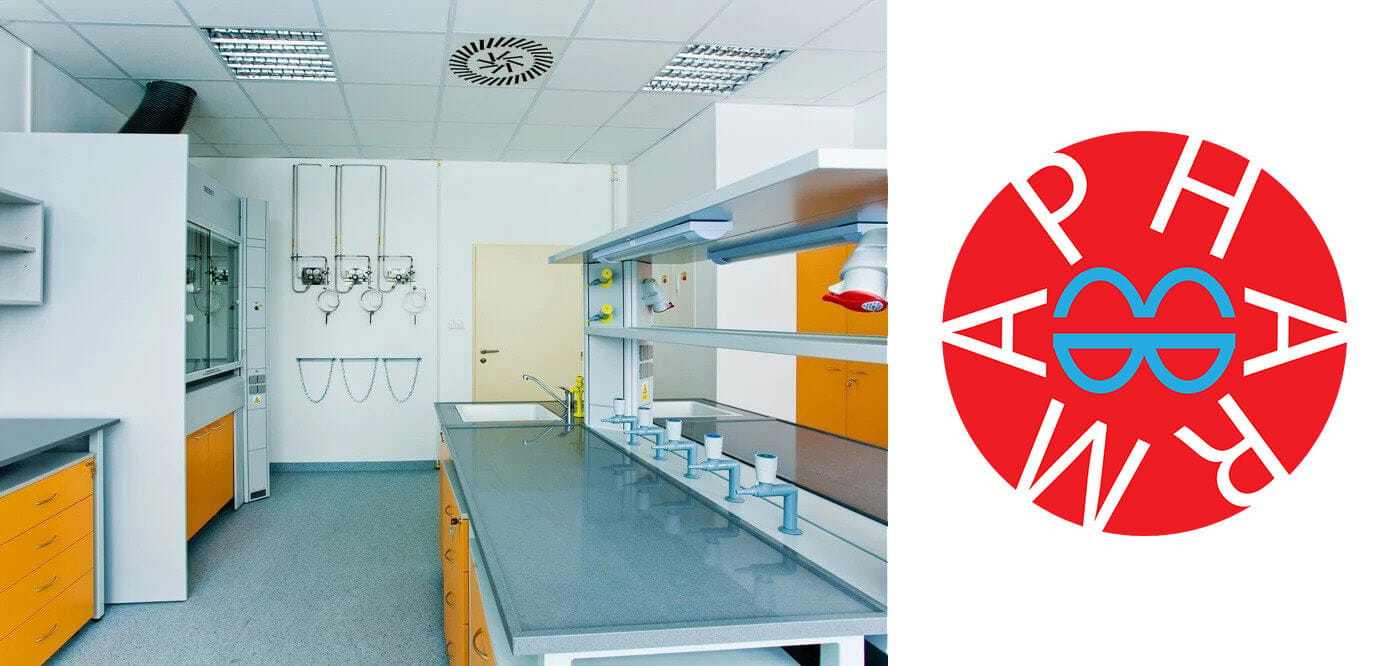
Therefore, the main target of MB Pharma was (and still is) simple: to obtain marketing authorisation for an in-house-produced, phage-based product, and to perform all the necessary preceding steps. First, an R&D laboratory was equipped, and the team was established to work on research and development of phage production and testing. Next, another facility was established, focused on GMP phage manufacturing. In 2016, the manufacturing lab was GMP-certified by the Czech Drug Authority, and bacterial and phage lysates started to be produced and released as Drug Substances and Human Investigational Drug Products.
But the process takes a long time, showing more and more hurdles to be passed. Therefore, at the moment, we have split our activities to two ways. We still maintain our pipeline toward running a clinical trial and obtaining marketing authorisation of a phage-based product. Besides that, we serve as a CMO (contract manufacturing organisation) for those who need phages produced both in GMP and non-GMP modes.
Making phage therapy alive again
This is how we would like to set up collaboration in the phage therapy field. Our mission is to support everyone who would like to work with phages. Do not waste your rare time and resources with routine phage production, when we can do it for you. Instead, you can focus on the key part of your projects, where your expertise lies. Because we all have the same target: let’s make phage therapy alive again.

Milan Buňata
Milan Bunata is a Business and Strategy Director in the MB Pharma company, Czech Republic. He graduated the Nuclear Chemistry at the Czech Technical University, Prague and prior to the phage field, he worked in radiopharmacy and radiation protection. He would like to contribute to the worldwide development and implementation of the phage therapy. He lives in Prague, plays violin, and loves travelling, good red wine, and his daughter.