

Issue 180
Phage therapy at the Queen Astrid Military Hospital: a conversation with Jean-Paul Pirnay

This week, Madhav Madurantakam Royam, a PhD student at the University of Warwick, talks to Dr. Jean-Paul Pirnay about how the Queen Astrid Military Hospital in Belgium is advancing phage therapy.
Sponsor
Sponsor

As we look forward to the 2022 Phage Futures Europe event, 6-7 July in Amsterdam, take a look at the 2021 post-event report, created in collaboration with PhD students from Phage Directory, Sheetal Patpatia and Aël Hardy, to gain insight into phage manufacturing, phage matching and more.
Delve deeper into these conversations at the Phage Futures 2022 event and explore new areas including new clinical data from Eligo Bioscience, Intralytix, PhageLux, improving formulation and manufacturing, computational approaches to phage cocktail design, methods for scaling up, regulatory considerations and more.
Community digest5updates6jobs2posts
Updates
News: Pherecydes Pharma announces the first international approval of a compassionate treatment with its phages.
Pre-print: CRISPR-Cas effector specificity and target mismatches determine phage escape outcomes.
Paper: Exodus: an open source tool for phage quantification by BiomX.
Paper: A phage receptor-binding protein as a promising tool for the detection of Escherichia coli in human specimens.
Paper: A novel bacteriophage cocktail targeting Staphylococcus aureus and MRSA biofilms.
Jobs
Postdoc to study cell wall biogenesis of mycobacteria and explore treating mycobacteria with phages in Dr. Miriam Braunstein’s lab, which investigates basic biology and mechanisms of pathogenesis of mycobacteria.
Junior/Assistant/Associate/Full Specialist to join the Turnbaugh Lab, which studies the impact of the human gut microbiome on the treatment of chronic and infectious diseases, and is also interested in discovering and engineering phages to manipulate microbiome composition and metabolic activity.
Research assistant to join the Phage Therapy Working Group at University of Idaho to advance the principles of phage therapy using evolution.
Postdoc to focus on phage bioinformatics for the MRFF Frontiers funded Phage Australia project at CSIRO.
Postdoc to work on the bioinformatics of co-evolution between temperate phages and Klebsiella.
Student helper to assist with the culturing and purification of phage for the Baylor College of Medicine, US.
Community board
Webinar: Embracing the Australian Pathway to Phage Therapy in Canada: Connect Globally, Act Locally.
Hosted by AMMI (Association of Medical Microbiology and Infectious Disease Canada)
Tuesday, June 28th at 6pm - 7pm EDT Ottawa (Wednesday, June 29th at 8am - 9am AEST Sydney).
Join the AMMI Canada Phage Therapy Working Group and invited speakers, Dr. Jon Iredell and team to illustrate how Phage Australia was created and developed research strengths and opportunities.
Joining the discussion are Jessica Sacher and Jan Zheng from Phage Directory, a data partner with Phage Australia, on how anyone, anywhere can connect on phage therapy.
A Q&A period will follow the presentation, tying in Canada’s unique capabilities.
Phase Genomics has partnered with Bill & Melinda Gates Foundation and National Institute of Allergy and Infectious Diseases to generate a global scale repository of phage-microbe interactions to create improved diagnostics and therapeutics.
They’re looking for collaborators who may be interested in providing samples in exchange for getting the data back, to be used for publishing, grants, etc.
This piece is sponsored by Kisaco Research for the Phage Futures Europe 2022 conference, happening July 6-7, 2022. Register here!

Jean-Paul Pirnay is Head of the Laboratory of Molecular and Cellular Technology at Queen Astrid Military Hospital, which produces phages for phage therapy.
Madhav: Can you tell me about your background?
Jean-Paul: I am a Biotechnology Engineer, and did my Ph.D. in Medical Sciences. My expertise involves skin transplants, tissue engineering, cell therapy, and microbiology. I did my military service in 1993 at the Queen Astrid Military Hospital (QAMH) in Brussels, Belgium and have been doing research here for the last 28 years.
In 2005, I became the head of the Laboratory of Molecular and Cellular Technology at QAMH. The department complex harbours a cleanroom complex where the bacteriophages (phages) are produced for therapy. My first involvement in an application of phage therapy was in 2008.
Can you tell us about the Belgian 'Magistral Phage' initiative for tailor-made phage therapy?
With the increasing awareness of phage therapy for resistant bacterial infections, Belgium has regulated the necessary requirements for phage therapy, where an independent laboratory can control the quality and safety of the phages, thereby making it easier for the doctors to prescribe them.
As a result of the Magistral Phage framework, Good Manufacturing Practices (GMP) have not been required for phage therapy in Belgium since 2018. Before that, we used Article 37 of the Declaration of Helsinki for sporadic phage applications.
Can you tell us about the phage therapy applications ongoing at QAMH?
We have been involved in several studies, and we do phage therapy routinely, as part of standard of care. Generally, we perform coordinated treatments (often at hospitals other than QAMH), although not all treatment is done in hospitals.
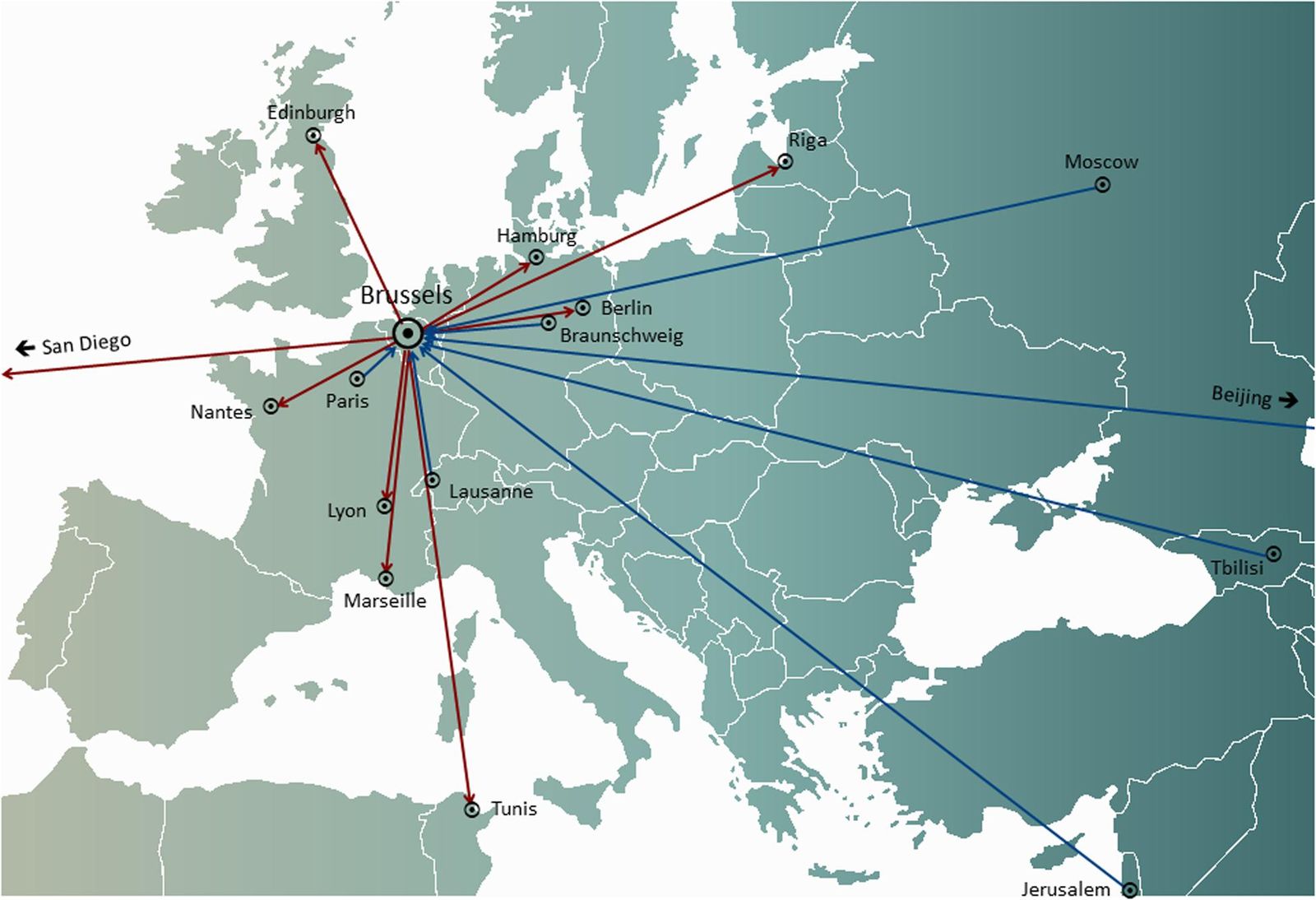
So far, about 110 patients have been treated, and we have shipped phages to 35 hospitals in 12 countries around the world. We have been involved in the PHAGOBURN trial, which is a randomised, controlled, double-blind phase 1/2 clinical trial that was completed in 2017 and has been published.
A clinical trial for phage therapy involving difficult-to-treat musculoskeletal infection (MSI), chronic rhinosinusitis (CRS) or sepsis called PHAGEFORCE is currently ongoing, and the study protocol has been published.
What are your thoughts on taking phage therapy global? What are the steps required?
Phages are just an additional tool; most of the time, they needs to be used along with antibiotics for several reasons. The advantage of personalised phage therapy is that they are not defined, or so-calledbroad-spectrum products, a strategy that will work for very few species like Staphylococcus aureus; for others, it will not. In that case you have to go for a personalised approach in combination with antibiotics.
The main problem with a personalised approach is the logistics, because it is hard to get the bacterium and test your phage. Sometimes you need to train your phage or try it with antibiotics to make it work better. Additionally, it is time-consuming, and you have to send bacteria and phages worldwide.
Tackling all these issues is challenging, so we are now researching possibilities for synthetic bacteriophages produced in every hospital in the future, where machines will be used to make phages, and predictions based on artificial intelligence will be used to synthesise personalised phages. In the coming 10 to 15 years, we will have some intermediate phases, where personalised therapy will be fine-tuned as well as we can.
What are your thoughts on the Phage Futures Europe conference?
I have participated in Phage Futures Europe, Brussels, Belgium, 23-24 November 2021, and I enjoyed it.
My view on Phage Futures is that it mainly focuses on industry, and the registration fees for academics are over the budget for most of them. I have put forward this issue in previous meetings as most new ideas will come from academicians. It will help to collaborate and share their views as academicians' involvement will help bridge the gap between the unknowns in phage therapy. I would also suggest moving to a bigger venue if that's the issue.
I am excited to join and learn more about the updates about the bacteriophage research at the Phage Futures 2022 in Amsterdam, The Netherlands.
Further reading
- Jean-Paul's group published this paper in 2019: Processing Phage Therapy Requests in a Brussels Military Hospital: Lessons Identified
- Check out our blog post on the paper, How the Queen Astrid Military Hospital processes phage requests, which we published in issue 31 of Capsid & Tail

Madhav Madurantakam Royam, M.Sc, M.Tech
I am Madhav Madurantakam Royam, a first year Ph.D. student at Puxty’s Lab at the School of Life Sciences, University of Warwick, UK. My Ph.D. work focuses on elucidating the role of tRNA’s in mycobacteriophages with respect to its virulence and host range. My work involves evolution of mycobacteriophages against their hosts and generating tRNA mutants in them. I have finished my Master of Science (MSc) and Master of Technology [By Research] degrees from Vellore Institute of Technology, Vellore, India. I have had experiences on working with Gram-negative pathogens such as Citrobacter sp. Pseudomonas aeruginosa, Klebsiella sp, and Escherichiacoli. During my Master of Technology [By Research] degree, I have isolated lytic bacteriophages against Citrobacter sp. and characterized their in vitro & in vivo efficacy in a zebrafish model.
My research interests are to understand the evolution of phages against their hosts and characterise their defence mechanism them using various molecular biology and bioinformatic tools.