

Issue 286
Our Phage Picks for October 2024!

It's Phage Picks time! This week we've got the seventh rendition of our new format, where we share the papers we keep bookmarked, and keep coming back to.

Sponsor
Sponsor
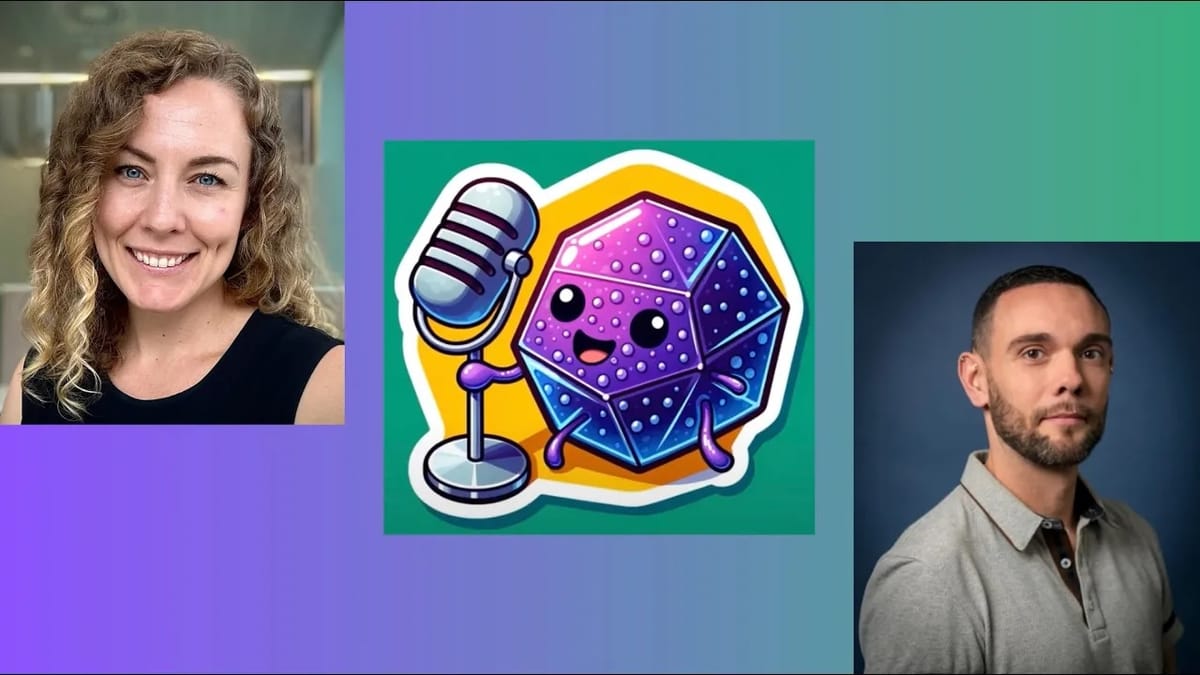
Why aren't phages routinely used in the world yet? It constantly feels that they're not living up to their potential, and I want to understand why.
I’m super excited to share our new podcast, Podovirus. This is a new experiment. I wanted a (better?) excuse to have in-depth conversations with some of my favorite phage people, and ask them about what they’re doing, what work still needs to be done, why certain things are hard, etc.
Come join the fun!
🎙️ Most recent episode: Jesus Fernandez-Rodriguez, PhD, VP of Technology at Eligo Bioscience, shares how their team is editing live microbes in the mouse gut with engineered phages!
🎧 Listen: Podovirus on Spotify
🎥 Watch: Podovirus on YouTube
Subscribe to get the next episodes!
🩺 Up next: Joe Campbell joined as a co-host for an interview with Dr. Gina Suh, Mayo Clinic ID physician, about what makes the best phage therapy patients, getting phage therapy up and running at her institution, and her current hopes and challenges.
🍅 On deck: Joe and I interviewed Alexander (Sandro) Sulakvelidze, CEO of Intralytix, about his 26-year (!) journey toward getting phage cocktails on the market in the food industry, the 3 clinical trials they've got running, and the efficacy data (hopefully) around the corner!
Community digest5updates8jobs2posts
Updates
Xin Hou (Sun Yat-sen University, China) and colleagues published a new paper on using AI to expand the diversity of the global RNA virosphere, showing 161,979 putative RNA virus species and 180 RNA virus supergroups identified in diverse global ecosystems.
Tetrapyrroles such as heme, chlorophyll, and vitamin B12 are essential for various metabolic pathways. Helen Wegner (University of Kaiserslautern-Landau, Germany) and colleagues demonstrated the presence of tetrapyrrole genes in phage sequences from aquatic environments, showing that these genes are functional and can synthesize 5-aminolevulinic acid.
Stephano Iglesias (Thomas Jefferson University, Philadelphia) and colleagues created a high-resolution structural atlas of Pseudomonas phage Pa193 using bioinformatics, proteomics, and cryogenic electron microscopy single particle analysis. They identified, annotated, and built atomic models for 21 polypeptide chains forming the capsid, neck, tail, and baseplate.
David Mayo-Muñoz (University of Otago, New Zealand) and colleagues identified noncoding RNAs as key players in bacteria–phage conflicts, showing their roles in bacterial immunity and anti-defense mechanisms.
Nawal Al Aazi (Gaziantep University, Turkey) and colleagues identified clinical Pseudomonas Pf phages inducible by mitomycin and investigated Pf1 phage, showing the presence of Pf1 phage associated with antibiotic effects.
Jobs
Siân Owen’s lab at the Wadsworth Center in Albany, NY is up and running and just needs enthusiastic phage biologists to populate it! Contact her or apply here if you are interested in a postdoc exploring plasmid-dependent phage biology in beautiful (and super affordable!) upstate New York.
Find Siân on Twitter @Implosian!
The University of Colorado Anschutz Medical Campus is hiring a postdoctoral research fellow to study phage interactions with host bacteria in the Duerkop laboratory.
Cornell University's Department of Food Sciences is hiring a postdoctoral associate to study protein engineering and bacteriophage protein interactions in Ithaca, NY.
Pat Secor at Montana State University is hiring a Research Lab Manager to manage phage-related research activities.
The FDA's Center for Biologics Evaluation and Research is hiring a postbac fellow to develop reagents for characterizing live biotherapeutic products in Silver Spring, Maryland.
Phaxiam (Lyon, France) is a phage therapy biotech company always looking for motivated talent. Interested? Send them an open application and let them know!
Bangor University's National Wastewater-Based Epidemiology Laboratory in Bangor, UK is hiring a sequencing technician/RA to study wastewater-based epidemiology and track enteric and respiratory pathogens.
The Technical University of Munich and Helmholtz Centre Munich are hiring a Systems Biology PhD to study phage-bacteria and virome-microbiome interactions.
Community board
This Week in Virology (TWiV) recorded a special live podcast episode at the 2024 Viruses of Microbes meeting in Cairns, Australia. Hosts Vincent Racaniello and Jolene Ramsey interviewed phage researchers Krystyna Dabrowska and Rob Lavigne about phage therapy, immunological challenges, personalized approaches, and new developments in phage-derived products.
Key timestamps: 23:50 - Immune responses to phages 28:52 - First 100 cases of phage therapy in Belgium 35:23 - Magistral preparation for phage therapy 41:47 - Endolysins and DNA dark matter 50:51 - Phage-derived tools for non-model organisms
Watch the full podcast on YouTube!
Only a few more days to vote for the International Society for Viruses of Microbes Executive Board candidates! (Ends Oct 21)
ISVM members are invited to participate in the upcoming elections for the ISVM Executive Board to shape the future of the organization and its initiatives in viruses of microbes research.
How to vote? Check your email (and if you didn't get one, check your spam folder!) Each member should have gotten an individual email with a voting link.
Howdy phage phans!
For most of you, summer’s been over for well over a month now. In San Francisco, we just got a heat wave of more than a week of 30°C+ days. And we don’t have AC. Yikes.
In the past week, Jess was invited to speak at the Canada SynBio Conference up in Toronto, I’ve been re-building most of Phage Directory from ground up, and we both got a chance to present Phage Directory and our work at Phage Australia to the lovely team at the Lawrence Berkeley National Lab, headed up by Dr. Vivek Mutalik. If you don’t follow him on Twitter… you really should (but maybe not, since that’s actually where I get most of my Phage Picks haha).
For Phage Directory, we’ve had our Profiles for a long time — for people, labs, and organizations. In the beginning, when the Directory was tiny, this worked well. Not anymore. The site wasn’t really designed around “real” profiles like Twitter and Facebook, where you can sign up, sign in, edit your information, and so on. Well, we’re re-thinking and re-building all that!
We’ve long wanted a place for labs to share their latest work, their on-going thoughts and experiments, capabilities, and most importantly invitations to collaborate on large grants.
Sometimes a collaborator with a specific expertise (or a piece of equipment!) is what stands between your lab and that massive grant.
We’re starting with a small group of labs and individuals. Here’s Jessica’s site (jess.bio) and Atif Khan, our awesome volunteer’s site (atif.phage.directory).
Let me know if you want to be first to get a site setup for your lab and members by emailing (jan@phage.directory)! We’ll otherwise gradually upgrade labs to the new system.
Best,
~ Jan
Plazomicin (Achaogen) financial post-mortem: #PassPASTEUR
Well, I can’t exactly say I’m “excited” about Achaogen going bankrupt, but this is a fascinating read. According to the authors “there’s no viable path for new drugs however valuable they are to society.” Achaogen was the last biotech company that was brave enough to try to invent a new antibiotic — they raised $800M, but ended up selling for $16M. They went bankrupt despite coming up with a new mechanism and getting all the way through clinical trials. This blog post (and the full paper) breaks down all the pieces of what didn’t work. There’s some crazy information here — apparently it costs $350M just to maintain the antibiotic on the market, fort the first ten years AFTER approval.
Honestly? This makes me surprised that anyone works in drug development in the first place. This is definitely worth a read, and I’ll probably write a bigger post on this later in the year.
~ Jan
Blog Post: https://amr.solutions/2024/10/14/plazomicin-achaogen-financial-post-mortem-passpasteur
Outterson, J.R.& K. (2024) Plazomicin (Achaogen) financial post-mortem: #PassPASTEUR, AMR.Solutions. Available at: https://amr.solutions/2024/10/14/plazomicin-achaogen-financial-post-mortem-passpasteur/ (Accessed: 17 October 2024).
Full Paper: https://doi.org/10.1057/s41599-024-03452-0.
Nadya Wells, Vinh-Kim Nguyen, & Stephan Harbarth. Novel insights from financial analysis of the failure to commercialise plazomicin: Implications for the antibiotic investment ecosystem. Humanit Soc Sci Commun 11, 941 (2024).
Tapping the treasure trove of atypical phages
What is it about?
In this review paper, Vivek and Simon go in-depth into non-typical (aka non dsDNA phages), and go into ssRNA and ssDNA phages — like leviviruses and inoviruses (aka filamentous phages). Mostly they analyzed and discussed metagenomic analyses around these, and their diversity. Apparently most of our isolation methods bias our selection towards pilus-specific phages (I always wondered about that) and how there’s a huge diversity of phages (that we can see metagenomically).
Why I’m excited about it:
This is a cool collaboration between two heavy hitters (and my favorite people) in the phage world: Simon Roux and Vivek Mutalik. This paper also covers something I think more phage folks should get into — weird phages that don’t infect your typical E. coli! Of course, they come with a whole host of problems, like how the heck do you isolate them, etc. It probably will come down new techniques, methods, protocols, and tools for screening and isolating phages. We’re just at the very very beginning of phages — and keeping in mind so many cool findings in biology, like DNA and CRISPR, all came from phage more. There’s way more out there to uncover!
~ Jan
Paper: https://www.sciencedirect.com/science/article/pii/S1369527424001310
Roux, S., & Mutalik, V. K. (2024). Tapping the treasure trove of atypical phages. Current Opinion in Microbiology, 82, 102555. https://doi.org/10.1016/j.mib.2024.102555
Directional Immobilisation of SpyTag Bacteriophage on PDMS surfaces for Phage based Microfluidics
What is it about?
This preprint describes a new method for designing phage-based biosensors for bacteria detection. They use a technique for directionally immobilizing phages onto a surface using a pair of protein systems (SpyTag/SpyCatcher), on Polydimethylsiloxane (PDMS) surfaces, commonly used to make microfluidic diagnostic devices. They then built a proof of concept detector with an E. coli K1 phage.
Why I’m excited about it:
This preprint came our Phage Directory email, and caught my eye because I don’t get to see very many new chip / microfluidics phage projects. Plus, the technicality of the paper’s way too deep for me — but we’ve replied and hope to either get a Capsid article or a blog post from the team!
~ Jan
Preprint: https://www.biorxiv.org/content/10.1101/2024.10.11.617866v1
NotebookLM Audio Summary: https://media.phage.directory/capsid/phage-picks-oct-2024/spycatcher.mp3
bioRxiv 2024.10.11.617866; doi: https://doi.org/10.1101/2024.10.11.617866
Why a good lab website matters
What is it about?
This short editorial from Nature Metabolism lays out a few reasons behind why having lab website is important, as a good website helps attract students, staff, and collaborators, and makes the work look more legit. A good websites shows current staff, past staff (and where they’ve gone), paints the culture of the lab, and highlights key publications.
Why I’m excited about it:
Well, I couldn’t have said it better. Also, I didn’t make it up — Nature Metabolism wrote a short editorial piece about… why good lab sites matter?!
They miss a couple of key points — the purpose of a good lab site is to attract the best people for your lab. This means attracting those that shares the culture, work ethic, complements skill sets, and fills in the gap for the lab. Though painting the science behind the lab is important, it’s also necessary to show how the lab thinks, and where its science is going in the future.
Anyway, both Jess and I share that sentiment, but getting one built and published is often a mess. If you set it up yourself, e.g. with Wordpress, it’s always a hassle to update. If you pay for someone else to build it, then you have to keep paying them. There has to be a middle ground, and that’s what we’ve been exploring with the future of Phage Directory!
~ Jan
Editorial, Nature metabolism: https://www.nature.com/articles/s42255-023-00797-9
Why a good lab website matters. (2023). Nature Metabolism, 5(4), 533–533. https://doi.org/10.1038/s42255-023-00797-9
Jan Zheng, MHCI
I'm Jan, the other half of Phage Directory, and co-write Capsid & Tail.
Previously, I did data work at Phage Australia / Westmead Institute, where I built the biobank databases, data systems, and bioinformatics workflows for the clinical trial
I have a background in computer science and human-computer interaction, and I'm currently full-time at building the agentic layer for science at Nvidia.