

Issue 159
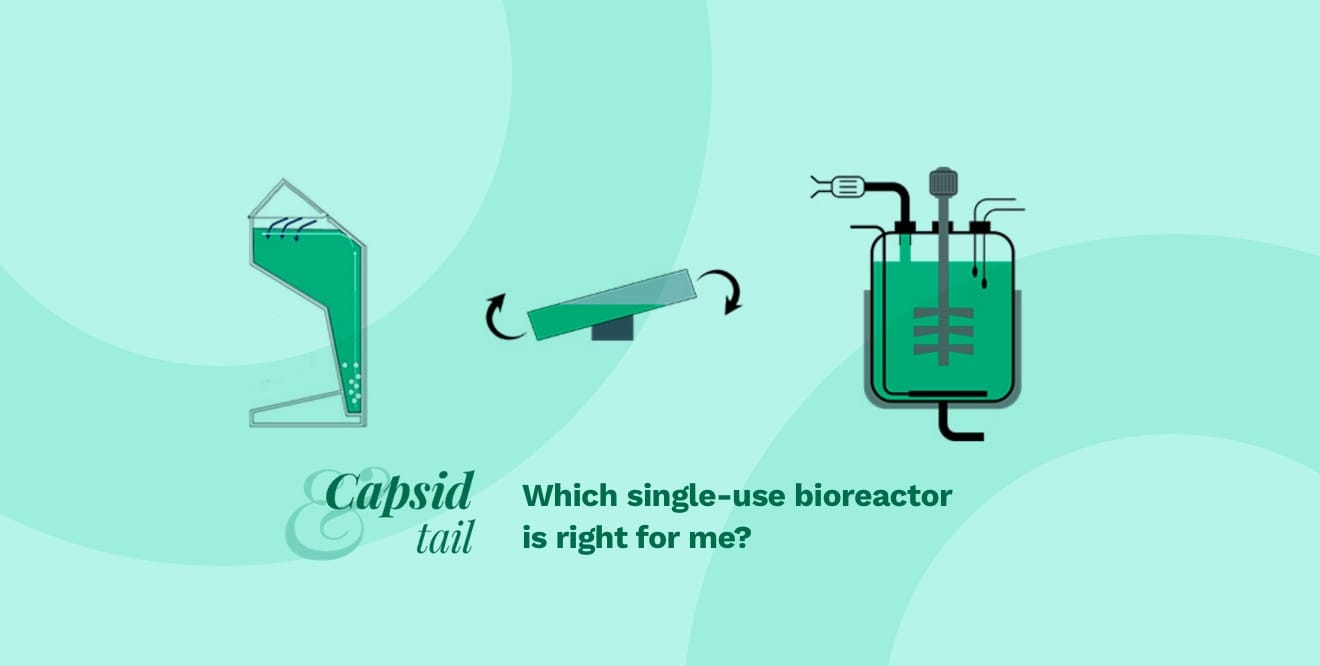
Which single-use bioreactor is right for me?

A bioreactor should provide the ideal environment for cells (and by extension, phages!). But choosing your setup can be tough. This week, Robert Matthew from Cellexus provides a nice explainer to help you understand your options!
Sponsor
Sponsor
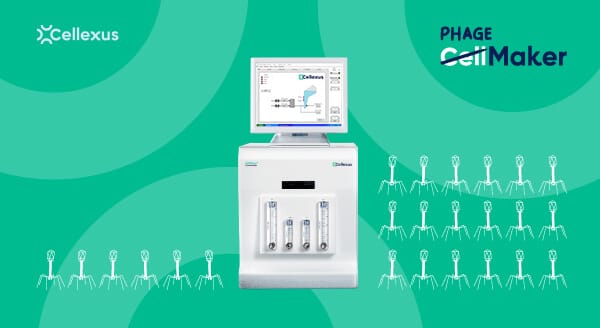
The CellMaker is the ultimate phage making machine. With batch-to-batch reproducibility and complete control over the growth environment, the CellMaker gives accurate and reliable results, so you can focus on more important tasks.
Find out how the CellMaker differs from traditional methods, and the excellent results being achieved by their customers: https://cellexus.com/phagemaker.
Community digest5updates6jobs5posts
Updates
I would like to introduce Phage Commander, a new genome annotation tool that runs a genome through multiple gene calling programs simultaneously and outputs the results to a single spreadsheet. Phage Commander includes the following programs: Glimmer, GeneMark, Prodigal, RAST, MetaGene, and Aragorn. Phage Commander is super easy to install and use, and runs on Mac, Windows and Linux. Download here. Read the paper here — Contributed by Philippos Tsourkas
Exodus is an open source tool for detection and quantification of phage pooled together in a single sample. It allows for accurate quantification of known phage, even when they are sequenced alongside with other very similar phages.
Preprint: Class I DISARM provides anti-phage and anti-conjugation activity by unmethylated DNA recognition.
Paper: Type I CRISPR-Cas provides robust immunity but incomplete attenuation of phage-induced cellular stress.
Preprint: a novel locally c-di-GMP-controlled exopolysaccharide synthase is required for phage N4 Infection of E. coli.
Jobs
A 2-year postdoctoral position is available at the Saint-Antoine Research Centre (Sorbonne University, Paris, France) to work on the interactions between bacteriophages, the intestinal mucosa and the epithelial barrier function in acute and chronic inflammatory conditions. For more information, please contact Luisa De Sordi (luisa.de_sordi@sorbonne-universite.fr).
Research Fellowship at the Center of Biological Engineering to work on the R&D project, Phages-on-chip, an integrated phage-based microdevice for multiplex detection of bloodstream infections.
Postdoc at APC Microbiome Ireland to mine biological entities (‘pharmabiotics’) from the gut, including probiotics, prebiotics, bacteriocins, bacteriophages and other bioactive molecules.
PhD project to study microbiome-based strategies for biocontrol of C. difficile at the Quadram Institute Bioscience, UK.
Biological or chemical technical assistant at Friedrich Schiller University to work in the new Viral Ecology and Omics group of Prof. Bas E. Dutilh, which aims to study the role of viruses in the Microverse.
Postdoc in the Anantharaman Lab to develop and apply bioinformatic tools to study ecology, evolution, and diversity of viruses/phage in the environment.
Community board
Thanks to all who came out to the first iVoM Season 2 event of 2022!
Next: Feb 2 from 2-3 PM CET Topic: Phage application in the One Health approach. Speakers: Dr. Cath Rees, Prof. Mariana Piuri, Prof. Lone Brøndsted.
If you want to join this series, which will run through May, please register at https://ivom.phage.directory — as many of you know, ISVM is asking for a small contribution from senior scientists and industry for access to this series, which will support ISVM’s activities now and in the future.
Phage Directory is a proud partner of this event, and so are the local organizers for VoM 2022, the upcoming in-person/hybrid conference in Portugal July 18-22!
IPATH invites the phage therapy community to the virtual screening and discussion event for the new documentary, Salt in My Soul. This film recounts the struggles and feelings of Mallory Smith, who lost her battle with cystic fibrosis and a rare superbug infection in November 2017. (Her story was the inspiration for Phage Directory!)
You'll get a link Jan 25th to stream the film at your convenience, before the panel event on February 1st (4:00 PM - 5:00 PM PST) on Zoom.
The panel will feature Diane Shader Smith, the film’s director Will Battersby, Dr. Doug Conrad, and IPATH’s Drs. Robert Schooley, Saima Aslam, and David Pride, moderated by IPATH Co-Director, Dr. Steffanie Strathdee.
Phages for Global Health invites scientists from anywhere in Africa, whether or not you have previously attended our workshops, to fill out this survey about your ongoing phage work or any aspirations for future phage-related activities.
PGH will use this information to both understand how phage work has continued to evolve on the continent and to connect African phage researchers with international collaborators who can help with activities such as DNA sequencing or microscopic (TEM) analysis of phages, as well as provide mentoring on specific topics.
Happy New Year from PHAGE Journal!
To celebrate the new year, you can access the papers in PHAGE Journal's new "Special Issue on Phage Informatics and AI" for free for a limited time!
Included in this issue:
- Phage Genome Annotation: Where to Begin and End, by Anastasiya Shen and Andrew Millard
- From Trees to Clouds: PhageClouds for Fast Comparison of ∼640,000 Phage Genomic Sequences and Host-Centric Visualization Using Genomic Network Graphs, by Guillermo Rangel-Pineros & colleagues
- And much more!
Not long left to submit abstracts to the virus & mobile genetic elements session at #AbSciCon22 (May 15-20 in Atlanta, GA). You can present in-person or virtually. Invited speaker Dr. Rachel Whitaker will discuss "Epidemics of Gene Flow in Hot Spring Meta-Populations”.
The role of a bioreactor is to provide the ideal environment for cells to focus on what they are supposed to do. With many configurations available on the market, it is often a struggle to choose which system is best suited for your operation. Initially, when selecting a bioreactor, you can choose stainless steel (SS) or single-use (SU) technologies. We discuss the pros and cons of SS and SU in our Modern Laboratory blog.
When it comes to SU, alongside the Cellexus CellMaker airlift bioreactor, there are 2 key bioreactor configurations on the market:
1. Pneumatic Airlift
Mixing entirely driven by purged air through submerged sparger. Oxygen transfer occurs via rising bubbles and headspace. No internal moving parts.
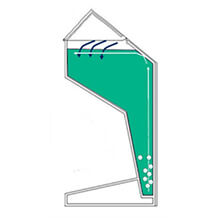 Figure 1. Pneumatic Airlift.
2. Oscillating Wave Bag
Mixing entirely driven by ‘wave’ motion of reactor. Oxygen transfer driven by headspace. No internal moving parts or submerged sparging.
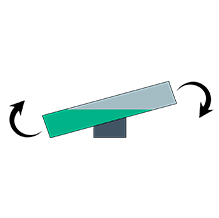 Figure 2. Oscillating Wave Bag.
3. Stirred Tank
Mixing driven by internal impeller (may also include baffles). Aeration driven by submerged sparger located under impeller.
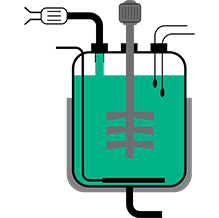 Figure 3. Stirred tank.
Oscillating Wave Bag
Launched in the mid-90’s, the wave rocking bioreactor was the first SU bioreactor design. Analogous to the CellMaker it features no internal moving parts. Its gentle agitation is driven by swaying-motion of the reactor bag on a rocking tray. This results in low shear stress – highly suitable for fragile mammalian cell lines. The design of these bags, however, has inherent limitations. The scale-up capacity is affected by the design of the bag, which can only handle working volumes at half of the actual bag volume. No sparged gas restricts the gas exchange rations, thus these bags are suitable only for cultivation of mammalian cells. The bacterial and yeast would struggle to achieve high cell densities in this type of a bioreactor due to their high oxygen demand.
Single-use Stirred Tank
Perhaps due to their popularity in the reusable reactor space, stirred tank reactor designs are also the most popular design when it comes to SU systems. These systems are known for their ability to deliver extremely high cell culture densities, but at the cost of equally high shear stress to the cells. This causes complications when growing shear-sensitive cell types in a stirred tank bioreactor and also not all bioproducts will remain stable in such conditions. Mirroring several design developments made in their SS predecessors, a lot of these essential features do not cross over as well to the SU. In particular, a stirred tank bioreactor requires an impeller to mix the liquor which inherently complicates the SU design as a cumbersome motor needs to be implemented (further risking sterility). Other issues with the CSTR designs are the inefficient methods of temperature control e.g., awkward heating jackets. The more complicated a system gets, the total of price additional materials (metals for impellers, spargers, internal brackets, seals) starts to compound. Furthermore, the type of propellor chosen forces a compromise between shear and mixing efficiency.
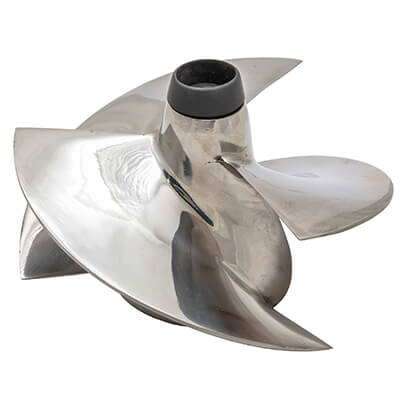
Figure 4. Marine-styled impellers allow more gentle mixing but at reduced mixing efficiency.
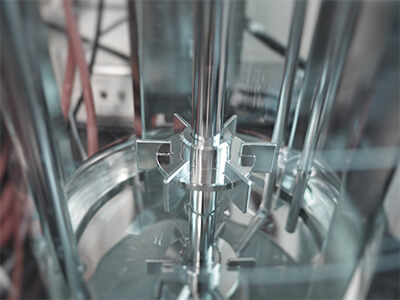
Figure 5. Rushton impellers are more aggressive in their ability to produce turbulent, well-mixed flow however are not suitable for sensitive cell lines as this mixing is coupled with high mechanical shear.
Pneumatic Airlift
Airlift technology is not a new technology, but it has been absent in bioprocessing until relatively recently. Unlike classic pneumatically agitated airlift reactors where liquid mixing is random (bubble column), the CellMaker’s patented bioreactor geometry means that liquid mixing flow is designed to circulate (driven by the gas sparger). In airlift bioreactors, liquid circulation between the riser and downcomer is the main contributor to fluid dynamics. This contrasts with stirred tank reactors where localized impeller mixing generates large shear gradients that cause cells to experience mechanical stress, as well as stress in areas of varied solutes concentrations (O2, CO2, H+, metabolites) and temperature imbalances.
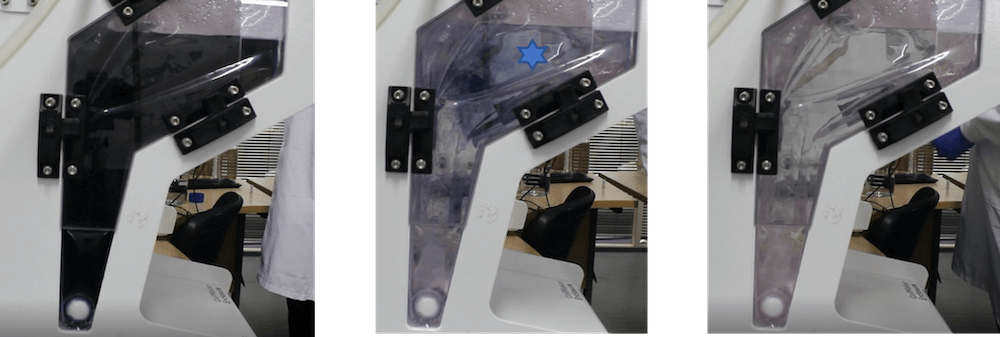 Figure 6. Iodometry Decolourisation Mixing Assay
Figure 6 shows there is no intense focal point of energy dissipation in the bioreactor. With our unique geometry, the liquid is gently vortexed in the upper section (blue star) before settling. In other bioreactors, it is common to experience mixing dead zones at the farthest point to the mixing driver (impeller); baffles are implemented to combat this effect by disrupting distal laminar flow. As seen in Figure 6 the last zone of incomplete mixing in the CellMaker is the center of the reactor which confirms homogeneous mixing and energy (shear) distribution. We believe these lower cellular shear forces are at the core of our universal success across multiple cell lines. Furthermore, with cell media occupying a significant share of process costs, Cellexus has found that the simplicity of our SU bag design means there is less likelihood for operational error, mechanical failure and – very important to us – risk of contamination.
Conclusion
In short, there are many routes to be taken when choosing upstream configurations. When it comes to SU bioreactors it is important to address both the biology of your system as well as the logistics of your manufacturing scale up. At Cellexus we have successfully maintained simplicity of use without sacrificing performance metrics.

Robert Matthew
Robert joined the Cellexus team in 2021 after completing Masters in Industrial Biotechnology and Chemical Engineering at the University of Strathclyde. In his role as a Technical Application Specialist, Robert supports Cellexus customers, ensuring they get the best results from their CellMaker.